
Post Traumatic Stress Disorder (PTSD) Treatment in Connecticut
Structured, evidence-based trauma therapy programs that help adults manage intrusive memories, fear, anxiety, and emotional reactions after traumatic experiences. Treatment includes EMDR therapy for PTSD, cognitive processing therapy for PTSD, and other research-supported approaches delivered by licensed clinicians.
✔ Licensed Trauma Therapists
✔ EMDR and Cognitive Processing Therapy
✔ Insurance Accepted
✔ Connecticut Mental Health Center
Understanding Post traumatic Stress Disorder (PTSD)
Have you experienced a traumatic event and continue to feel lingering fear or anxiety? Do intrusive memories, emotional reactions, or avoidance behaviors make it difficult to feel in control?
Posttraumatic stress disorder (PTSD) is a mental health condition that may develop after experiencing or witnessing traumatic events such as natural disasters, acts of violence, serious accidents, war, sexual assault, or other life-threatening situations.
PTSD affects nearly four percent of U.S. adults. While it is often associated with combat veterans, PTSD can affect individuals of any age, race, nationality, or background. Women are statistically more likely than men to develop PTSD.
Working with a qualified therapist for PTSD can help individuals better understand their symptoms and begin structured recovery.
Speak With a Therapist for PTSD


What are the Symptoms of PTSD?
People with PTSD often experience intense thoughts and feelings related to their traumatic experiences. These can last for a long time after the initial event. Many people with PTSD also relive the event through flashbacks and nightmares.
People with PTSD often feel intense emotions such as fear, anger, sadness, and detachment from friends, family, and community members. They often avoid people and situations that remind them of the traumatic event. Ordinary sounds or incidents such as a door banging or accidental touch in a crowd may cause a strong and uncontrollable reaction.
How Can PTSD Treatment Help?
There are a variety of treatments that can be used to treat PTSD. However, there are three specific techniques that are consistently gaining research-based evidence of their effectiveness in successfully treating PTSD.
- Cognitive Processing Therapy For PTSD – This modality focuses on how a person perceives a traumatic event and processes it. A therapist can help their client work through stuck points, which are certain thoughts related to the trauma that prevents the person from recovering.
- EMDR Therapy For PTSD – EMDR stands for eye movement desensitization and reprocessing. This technique uses bilateral sensory input such as side-to-side eye movements to stimulate the brain to process difficult thoughts, memories, and emotions.
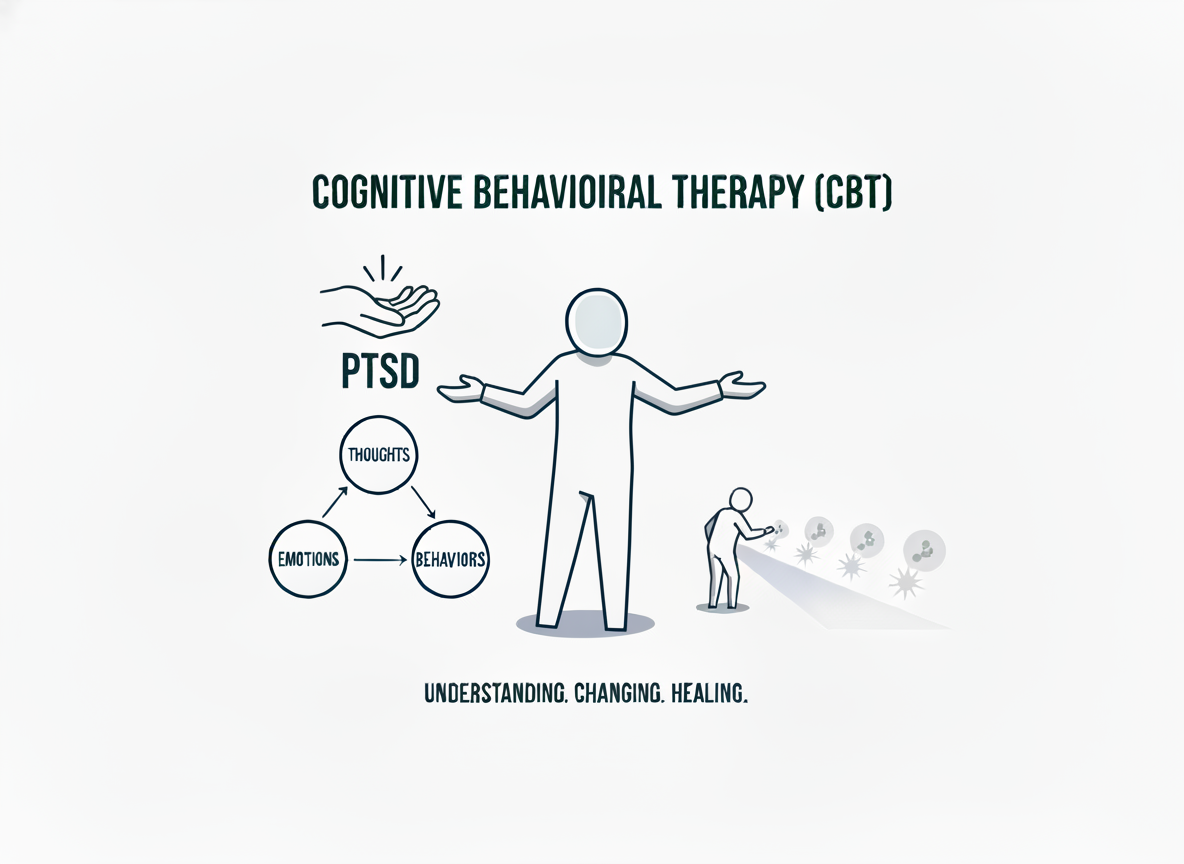
- Cognitive Behavioral Therapy (CBT) – CBT is a form of talk therapy that focuses on how thoughts, feelings, and behaviors are related to one another. The goal of a CBT therapist is to help a client with PTSD return to a place of hope with a greater sense of being in control of their thoughts and behaviors.
For individuals with more severe or persistent symptoms, a higher level of care such as inpatient PTSD treatment may be recommended before continuing outpatient therapy.
Explore PTSD Treatment Options

Structured Treatment Planning and Support
Cognitive Behavioral Therapy (CBT) helps individuals understand how thoughts, emotions, and behaviors interact. By changing unhelpful thought patterns and avoidance behaviors, CBT supports emotional regulation and gradual exposure to trauma-related triggers.
Treatment plans are personalized based on symptom severity, trauma history, and clinical evaluation. Therapy may be provided as outpatient care or as part of a higher level of care when needed.
For individuals requiring more intensive support, inpatient PTSD treatment may be recommended to provide structured stabilization before transitioning into ongoing therapy. Working with a licensed therapist for PTSD who has specialized trauma therapy training ensures consistent, evidence-based care throughout recovery.
Inspiring Stories From Our Community
Frequently Asked Questions
What therapies are most effective for PTSD?
Evidence-based approaches such as EMDR therapy for PTSD, cognitive processing therapy for PTSD, and CBT are widely supported for reducing trauma-related symptoms.
When is inpatient PTSD treatment necessary?
Inpatient PTSD treatment may be recommended when symptoms are severe, safety is a concern, or stabilization is needed before beginning outpatient therapy.
What happens during a PTSD therapy session?
Sessions focus on current symptoms, trauma-related thought patterns, and coping skills. Techniques vary depending on whether EMDR, cognitive processing therapy, or CBT is used.
How do I find the right therapist for PTSD?
Look for a licensed therapist for PTSD with specialized trauma therapy training and experience in evidence-based treatments.
How long does PTSD treatment take?
The length of treatment varies depending on symptom severity and response to therapy. Some individuals improve within months, while others benefit from longer-term support.