Most couples don’t walk into therapy at the first sign of trouble. They come after months, sometimes years, of trying to fix it themselves: after the same fight has played out one too many times, after one or both partners has quietly started wondering if the relationship can even be saved. That timing is normal. It also means the work often starts uphill, not because the couple is doing anything wrong, but because patterns that took years to build take real, patient effort to unwind.
There’s no shortage of confident marketing around couples therapy: how it fixes communication, restores intimacy, saves marriages. The honest version is more grounded than that. Couples therapy is a structured process for understanding the dynamics that keep you stuck, learning the skills to interrupt them, and deciding, with clearer eyes, what you actually want the relationship to be.
What We Work On
Every couple is different, but the work tends to cluster around a few recurring areas:
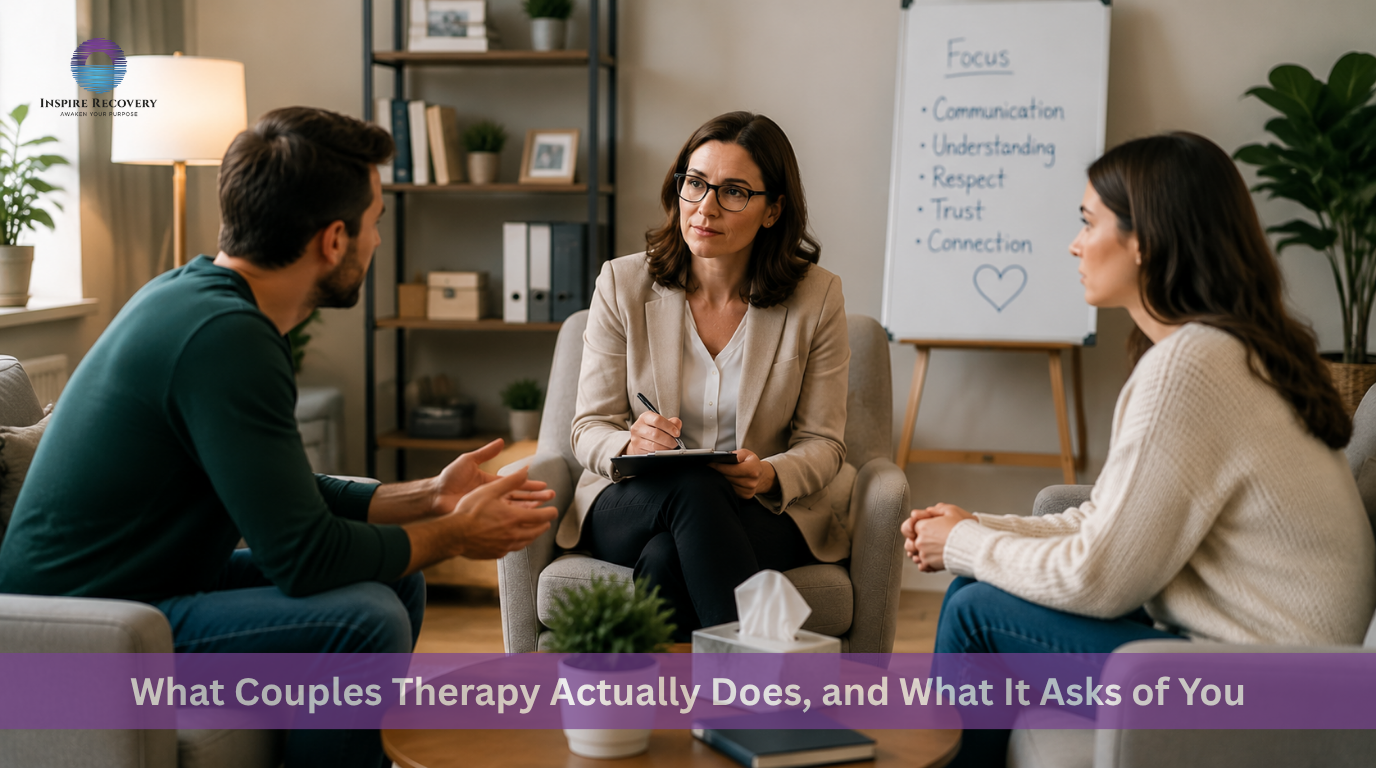
- The cycle. Nearly every distressed couple has a repeating pattern driving the conflict, and most of the relief comes from naming that pattern and learning to step outside it.
- Communication. Not the generic “use I-statements” advice, but the specific places where your communication actually breaks down.
- Repair. How you recover after conflict matters far more than whether conflict happens at all.
- Trust and intimacy. The deeper layer underneath: the wants and fears each partner is often protecting instead of naming out loud.
- When relevant: the impact of trauma, family-of-origin patterns, mental health, or substance use on the relationship.
What It Asks of You
Couples therapy is participatory in a way individual therapy isn’t. Both partners have to be willing to look at their own part in the dynamic, not necessarily equal parts in every situation, but each their own. Couples who show up expecting the therapist to confirm that their partner is the problem tend to leave disappointed, which is usually good for them in the long run, even if it doesn’t feel that way by session three. The work starts to soften once both people stop building their case and start getting curious about the pattern between them instead.
It also asks for some endurance. Patterns built over years don’t dissolve in a single session, and the early weeks often surface more than they resolve. That’s part of how the process works (you can’t change what stays hidden), but it helps to know that going in. Couples who stay with it past the discomfort of the opening phase tend to be glad they did.

When It Works, and When It Doesn’t
Couples therapy works best when both partners want the relationship to get better, even if they’re not sure it can. Ambivalence is normal. Outright unwillingness is much harder to work with. It tends to work less well when one partner is using therapy as cover for a decision they’ve already made, when active untreated addiction or untreated severe mental illness is driving the distress, or when there’s ongoing intimate partner violence. In those situations, individual safety and treatment have to come first.
It doesn’t require both partners to walk in with the same level of commitment. It does require honesty about where each of you actually stands, which is sometimes the first thing therapy helps you find.
The goal isn’t to win the argument you’ve been having for ten years. It’s to stop having that argument and start having the conversation it’s been hiding.
Discernment, Not Just Repair
Not every couple who starts therapy decides to stay together, and a good therapist won’t treat staying together as the only successful outcome. Sometimes the work clarifies that the relationship can be repaired, and the couple does that work. Sometimes it clarifies that the relationship has run its course, and therapy helps each person leave with more understanding and less damage than they would have otherwise. Both are legitimate outcomes. What the work consistently offers is clarity, instead of the murk of staying stuck.
What to Expect From Us
At Inspire Recovery, couples work begins with a thorough assessment: your history together, what brought you in, what each of you is hoping for. From there, we build a plan matched to your specific dynamic rather than running a one-size-fits-all protocol. We draw on evidence-based approaches, integrate trauma and substance use treatment when it’s relevant, and stay direct about what we’re seeing. We won’t tell you what your relationship should look like. We’ll help you see it clearly enough to decide for yourselves.
If you’ve been weighing whether to start, the first appointment is the place to begin. You don’t need to have your concerns neatly organized, and your partner doesn’t need to be fully on board yet. Bring it as it is, and we’ll work from there.
Start Your Journey to a Healthier, Happier You
Take the first step today – connect with a compassionate therapist who meets you where you are.
Frequently Asked Questions
If you keep having the same argument on repeat, feel more like roommates than partners, or just aren’t sure where things stand anymore, therapy can help. You don’t need to be certain the relationship will work out. You just need to want to find out together.
Not at all. Most couples try to work things out on their own first, sometimes for years, before reaching out. Coming in isn’t a sign of failure. It’s usually a sign you both still care enough to want something different.
That’s more common than you’d think, and it’s still workable. You don’t both need to walk in equally convinced. What matters is being honest about where you each actually are, which therapy often helps uncover on its own.
No, and that’s kind of the point. A good therapist isn’t there to declare a winner or hand you a to-do list. Their job is to help both of you see the pattern you’re stuck in clearly enough to change it together.
No. Sometimes couples repair and rebuild. Other times, they realize with more clarity that parting ways is the healthier path. Neither outcome is a failure. The real goal is leaving with clearer eyes, whatever you decide.