
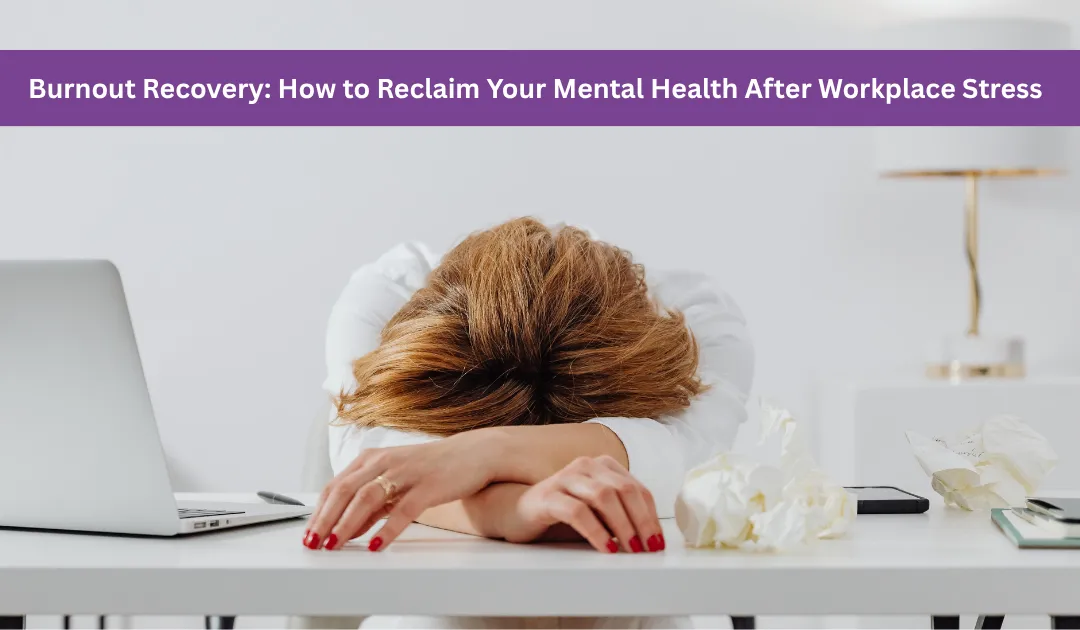
Burnout recovery means giving your mind and body real rest, setting boundaries at work, and rebuilding habits that protect your energy. You start by noticing the signs early – exhaustion, irritability, and feeling numb about your job. Small daily changes, not a single big fix, bring you back to full strength.
Work stress sneaks up on you. One day you’re handling deadlines fine. The next, you’re crying in your car before a Monday meeting. That’s not a weakness. That’s burnout, and it’s more common than most bosses admit.
What Burnout Actually Feels Like
Burnout isn’t just “being tired.” It’s a specific kind of tiredness that sleep doesn’t fix.
You dread opening your laptop. Simple emails feel like mountains. You snap at people you love for no real reason. And somewhere along the way, you stopped caring about work you used to enjoy – which, if left alone, often slides into depression or chronic anxiety.
The World Health Organization now classifies burnout as an occupational phenomenon – not a medical condition, but a real state tied directly to chronic workplace stress that hasn’t been managed well (WHO, 2019). That distinction matters. It tells you the problem is often the environment, not just you.
Step One: Admit It’s Happening
Most people wait too long. They push through until their body forces a stop – a panic attack, a stomach ulcer, a sudden collapse in the bathroom at work.
Don’t wait for that.
If you’re checking these boxes – constant fatigue, cynicism about your job, feeling ineffective no matter how hard you try – you’re likely in burnout territory already. Naming it is step one. You can’t fix something you’re still pretending isn’t broken. A short session with one of our individual therapy providers can help you put a name on what’s actually going on.
Rest Isn’t Optional, It’s Medicine
Here’s something I’ve noticed working with people who recover well: they stop treating rest like a reward they have to earn.
Rest is not a bonus for good behavior. It’s maintenance, the same way you’d change your car’s oil whether or not you “deserve” a smooth engine. Sleep especially matters. Poor sleep and chronic stress feed each other in a loop that gets worse the longer it runs, according to sleep researchers at the Sleep Foundation.
Try this simple weekly structure:
| Day Type | Focus |
| Weekday evenings | 30 minutes of zero screens before bed |
| One weekend day | Fully offline, no work apps |
| Every day | 10 minutes outside, no phone |
Small. Repeatable. That’s the whole point. Our mindfulness-based therapy team can teach you grounding techniques that make this structure stick.
Set Boundaries Even If It Feels Rude
You will feel guilty saying no. Say it anyway.
A boundary is just a rule you set to protect your energy. “I don’t check email after 7pm.” “I take my full lunch break.” “I don’t take on extra projects during a burnout recovery period.” These aren’t luxuries. They’re survival tools.
If your manager pushes back, that itself tells you something about the workplace culture you’re in. Burnout tied to career pressure often overlaps with what we treat under life transitions counseling, especially when a job change ends up being the real fix.
Rebuild Your Identity Outside Work
Burnout often happens because work becomes the only thing defining you. When that one thing cracks, everything cracks with it.
Pick up something that has nothing to do with your job title. Gardening. A pottery class. Terrible amateur guitar. It doesn’t need to be productive. It just needs to remind you that you exist outside a spreadsheet. For men specifically, this identity crash shows up in patterns we cover under men’s issues, and for women, under women’s issues.

Talk to Someone Who Actually Listens
Friends help. But a trained therapist sees patterns you can’t see in yourself.
Cognitive behavioral therapy, in particular, has strong research support for treating burnout and workplace anxiety (American Psychological Association). Our cognitive behavioral therapy program is built around exactly this kind of structured recovery work. If in-person visits feel like one more thing on your plate, telehealth sessions remove that barrier entirely.
Movement Helps More Than You’d Think
You don’t need a gym membership. You need your body moving.
A 20-minute walk changes your brain chemistry in ways that scrolling never will. Exercise lowers cortisol, the stress hormone that stays elevated during chronic burnout. Even light movement – stretching, a slow bike ride, dancing badly in your kitchen – counts.
Know When It’s Time to Leave the Job
Sometimes recovery isn’t possible while staying in the same role. And that’s a hard truth nobody wants to hear.
If your workplace has no interest in reducing your load, ignores your requests for support, or actively punishes people for taking breaks – that’s not a “you” problem anymore. That’s a company culture problem, and no amount of self-care fixes a toxic environment. If burnout has pulled your whole family into the fallout, couples and family therapy can help everyone reset together.
You Don’t Have to Do This Alone
Recovery isn’t linear. Some weeks feel great. Others feel like a total relapse.
If your burnout feels too heavy to unpack solo, our group therapy sessions connect you with people working through the exact same thing – and hearing “me too” from someone else changes a lot.
Recovery takes time. Weeks, sometimes months. Anyone promising a five-day fix is selling you something. Focus on daily habits, not a magic overnight cure, and give yourself permission to heal slowly.
Start Your Journey to a Healthier, Happier You
Take the first step today – connect with a compassionate therapist who meets you where you are.
Frequently Asked Questions
It varies widely – some people feel noticeably better in a few weeks, others need several months. Severity, workplace changes, and support systems all affect the timeline.
Yes, if the workplace is willing to adjust workload and respect boundaries. If it isn’t, recovery becomes much harder while staying put.
Stress is short-term pressure that usually eases once a task ends. Burnout is prolonged, chronic exhaustion that doesn’t go away with a weekend off.
Yes. Headaches, stomach issues, muscle tension, and frequent colds are common, since chronic stress weakens the immune system over time.
Both can help. A doctor rules out physical causes like thyroid issues, while a therapist addresses the emotional and behavioral side of recovery.