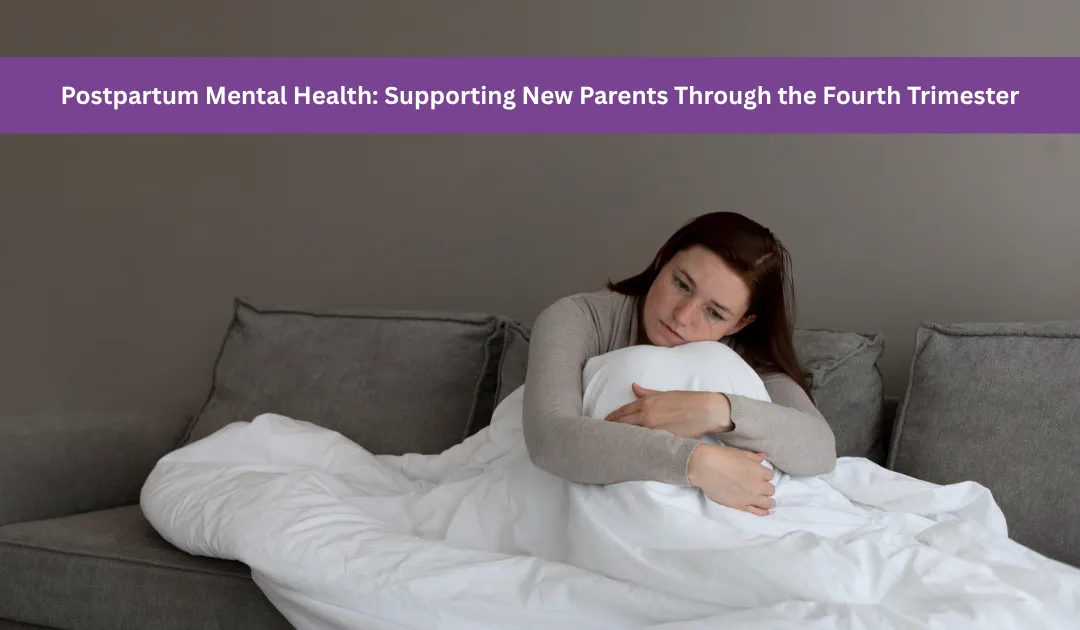
The fourth trimester is the twelve weeks after a baby arrives – the stretch when a parent’s body, hormones, and sense of self are all still catching up to what just happened. Postpartum mental health covers the full range of emotional and psychological changes that show up during this window, from the “baby blues” that fade on their own within two weeks to conditions like postpartum depression and postpartum anxiety that need real treatment. If you’re a few weeks in and quietly wondering whether what you’re feeling is normal, that question alone is worth taking seriously.
What’s Actually Happening in the Fourth Trimester
Pregnancy and birth trigger one of the fastest hormonal shifts the human body goes through. Estrogen and progesterone, both sky-high during pregnancy, drop sharply within days of delivery. At the same time, a new parent is running on broken sleep, healing physically, and often renegotiating their identity, their relationship, and their sense of control almost overnight. It’s not surprising that this counts as one of the more disorienting life transitions a person can go through – even a wanted, planned pregnancy can leave someone feeling unlike themselves for months.
Baby Blues, Postpartum Depression, and Postpartum Anxiety Aren’t the Same Thing
These three get lumped together constantly, and the differences matter for figuring out what kind of help you actually need.
- Baby blues affect up to 80% of new parents. Weepiness, mood swings, and irritability that peak around day 3–5 and resolve within two weeks without treatment.
- Postpartum depression (PPD) lasts longer than two weeks and goes deeper – persistent sadness, guilt, trouble bonding with the baby, changes in appetite or sleep beyond what’s expected with a newborn, and sometimes intrusive thoughts of harming yourself or the baby.
- Postpartum anxiety shows up as constant worry, racing thoughts, physical symptoms like a pounding heart, and sometimes panic attacks – often centered on the baby’s safety. It’s every bit as common as PPD, though it gets talked about far less.
Support built for counseling for anxiety applies here too, adapted for the postpartum context.
Both PPD and postpartum anxiety are treatable medical conditions, not signs of failure and not something a person can simply “push through.”

Risk Factors Worth Knowing About
Postpartum mood and anxiety disorders can affect any new parent, but some factors raise the odds:
- A personal or family history of depression or anxiety
- A difficult pregnancy, birth, or NICU stay
- Limited support at home
- Major life stressors happening at the same time (financial strain, moving, relationship conflict)
- A history of pregnancy loss
- Thyroid changes after birth, which can mimic or worsen mood symptoms
Identity and role changes hit especially hard for some new parents, which is part of why care that addresses broader women’s issues – not just the baby – tends to work better than a narrow focus on parenting skills alone.
What Treatment Actually Looks Like
Effective care for postpartum mental health usually combines a few pieces, not just one:
- Talk therapy. Approaches used in therapy for depression – including CBT and interpersonal therapy – have strong evidence for postpartum depression and anxiety specifically.
- Medication when appropriate. Many antidepressants are considered compatible with breastfeeding; a prescriber who specializes in perinatal mental health can walk through the actual risk-benefit picture rather than a blanket rule.
- Practical support. Sleep protection, meal help, and childcare breaks aren’t extras – they’re part of the treatment plan.
- Peer support. Talking with other parents who’ve been through it reduces the isolation that feeds postpartum depression and anxiety.
Recovery isn’t usually a straight line, and that’s expected, not a warning sign that something is going wrong with treatment.
How Partners and Family Can Actually Help
Partners and family members often want to help but aren’t sure how, and the wrong kind of help – minimizing, “just get some sleep,” unsolicited advice – can make things worse. What tends to help:
- Naming what you’re noticing without judgment (“You’ve seemed really down since the baby came – I want to check in”)
- Taking concrete tasks off the parent’s plate rather than asking “let me know if you need anything”
- Learning the warning signs of PPD and postpartum anxiety together
- Going to an appointment together, if the parent wants that
When the strain is affecting the relationship itself, couples and family therapy can give both partners a structured space to work through it together, rather than leaving one person to manage the adjustment alone.
When to Reach Out for Support
A good rule of thumb: if symptoms last more than two weeks, are getting worse instead of better, or are making it hard to function or bond with the baby, it’s time to talk to a professional. Any thoughts of harming yourself or your baby are a same-day, not “someday,” reason to reach out – call 988 (the Suicide & Crisis Lifeline) or go to an emergency room if you’re in immediate danger.
Start Your Journey to a Healthier, Happier You
Take the first step today – connect with a compassionate therapist who meets you where you are.
Frequently Asked Questions
Without treatment, postpartum depression can last months or, in some cases, years – it doesn’t reliably resolve on its own the way baby blues does. With treatment, most people see meaningful improvement within weeks.
Yes, delayed bonding is common and doesn’t mean something is wrong with you as a parent. If the disconnect persists alongside sadness, numbness, or anxiety, individual therapy can help address what’s underneath it.
Yes. A smooth first postpartum period doesn’t protect against PPD after a later pregnancy – each pregnancy and recovery is its own hormonal and life event.
Yes. Studies estimate roughly 8–10% of non-birthing partners experience postpartum depression, often tied to sleep loss, financial pressure, and the same identity shift birthing parents go through.
Sources: Postpartum Support International, Centers for Disease Control and Prevention