A panic attack hits without warning and peaks within about ten minutes. An anxiety attack builds slowly, tied to a specific worry, and can drag on for hours. The two get used interchangeably all the time – but knowing which one you’re dealing with changes how you calm down in the moment, and it changes what kind of treatment actually helps.
What Is a Panic Attack?
A panic attack is a sudden, intense wave of fear that hits full force within minutes – often without any obvious trigger. Racing heart, tight chest, shortness of breath, dizziness, a feeling that something terrible is about to happen. Some people are convinced they’re having a heart attack. Others feel like they’re losing control, even though neither is actually happening.
Panic attacks are recognized in the DSM-5 as a specific clinical experience. They typically peak within about ten minutes, though the after-effects – shakiness, exhaustion, lingering dread – can stick around longer. Anyone can have a panic attack once. Recurring, unexpected panic attacks are what lead to a diagnosis of panic disorder.
What Is an Anxiety Attack?
“Anxiety attack” isn’t an official diagnostic term – it doesn’t appear in the DSM-5 – but it describes something real. It’s the slow build of dread, worry, or physical tension tied to a specific stressor: a deadline, a conflict, a health scare, an upcoming event you can’t stop thinking about.
Where panic comes out of nowhere, anxiety attacks usually announce themselves. Tension creeps in over hours, sometimes days, before it peaks. Symptoms can include a knotted stomach, muscle tension, restlessness, and racing thoughts. If anxiety like this shows up often enough to interfere with daily life, it may point to a diagnosable condition – something anxiety counseling is built to address directly.
Panic Attack vs. Anxiety Attack: Key Differences
Short version: onset, intensity, and trigger.
- Onset: Panic attacks come on suddenly. Anxiety attacks build gradually.
- Duration: Panic attacks usually peak and fade within 10–30 minutes. Anxiety can linger for hours, or longer.
- Trigger: Panic attacks often strike without an identifiable cause. Anxiety attacks are usually tied to something specific.
- Intensity: Panic attacks tend to hit harder physically – chest pain, choking sensations, a fear of dying. Anxiety tends to sit lower, more like sustained pressure than a sudden wave.
- Diagnosis: Panic attacks are clinically defined. “Anxiety attack” describes an experience, not a diagnosis on its own.
None of this means one is “worse” than the other. Plenty of people live with both.
| Panic Attack | Sudden onset, no clear trigger required, peaks in ~10 min, intense physical symptoms |
| Anxiety Attack | Gradual build, tied to a specific stressor, can last hours, more psychological pressure than physical spike |

Why the Distinction Actually Matters
Here’s the thing – mislabeling what you’re going through can send you toward the wrong coping tools. Someone having a panic attack doesn’t need to figure out the trigger, because there often isn’t one. What helps is grounding the body fast. Someone in the grip of an anxiety attack, on the other hand, often does benefit from naming the stressor and working through it, not just riding it out.
Getting this right also matters for treatment planning. A therapist working with recurring, unexpected panic attacks is watching for panic disorder and building a plan around interrupting the fear response. A therapist working with someone whose anxiety builds around specific triggers is more likely to lean on cognitive behavioral therapy to unpack and reframe those thought patterns.
What Helps: Coping in the Moment
For a panic attack:
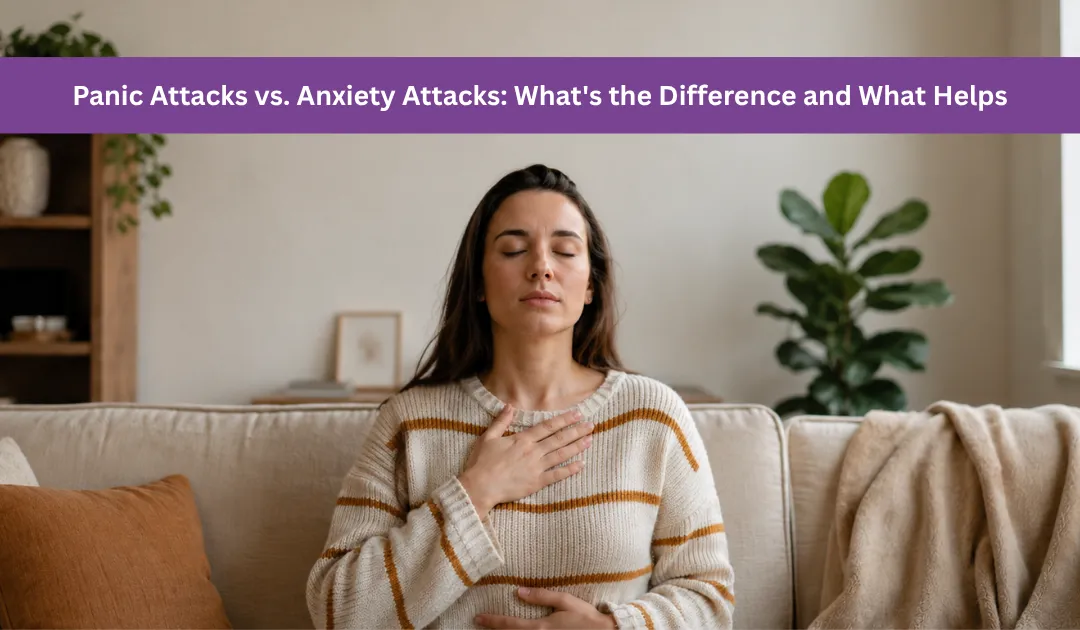
- Slow your breathing – exhale longer than you inhale. Four counts in, six counts out.
- Name five things you can see, four you can touch, three you can hear. Grounding pulls the brain out of fight-or-flight.
- Remind yourself: this will peak and pass, usually within minutes.
- Avoid fighting the sensations. Fighting panic tends to feed it.
For an anxiety attack:
- Identify the specific worry, even if just naming it out loud or on paper.
- Break the stressor into one small, doable next step instead of the whole problem at once.
- Move your body – a short walk changes the physiology of stress faster than sitting with it.
- Mindfulness-based practices – slow breath work, body scans – help interrupt the spiral before it peaks.
Treatment Options That Work
Short-term coping tools help in the moment, but they’re not a substitute for treatment when panic or anxiety attacks keep coming back. A licensed therapist can help you figure out what’s actually driving the pattern – and build a plan around it, not just around managing symptoms after they show up.
Options that tend to make the biggest difference:
- Cognitive behavioral therapy (CBT): helps identify the thought patterns feeding panic or anxiety, and replaces them with more accurate ones.
- Exposure-based work: gradually reduces the fear response tied to specific triggers or situations.
- Mindfulness and relaxation training: builds the nervous system’s tolerance for discomfort, so attacks lose some of their grip over time.
- Medication, when appropriate: for some people, working alongside a prescriber makes therapy more effective.
Individual therapy gives you a space to work through this one-on-one, at a pace that fits your history and your triggers – not a generic script.
When to Reach Out for Support
A panic attack now and then isn’t automatically a disorder. But if attacks are becoming frequent, if you’re avoiding places or situations out of fear of having one, or if anxiety is running your calendar – that’s worth talking to someone about.
You don’t need to have it all figured out before reaching out. That’s what the first session is for.
Start Your Journey to a Healthier, Happier You
Take the first step today – connect with a compassionate therapist who meets you where you are.
Frequently Asked Questions
A panic attack comes on suddenly and peaks within about 10 minutes, often without a clear trigger. An anxiety attack builds gradually, usually in response to an identifiable stressor, and can last for hours. Panic attacks are recognized in the DSM-5; “anxiety attack” is a widely used but informal term.
Yes. Ongoing anxiety can sometimes escalate into a full panic attack once stress builds past a certain point. The two aren’t mutually exclusive, and many people experience both patterns at different times.
Most panic attacks peak within 10 minutes and begin to ease shortly after, though physical effects like fatigue or shakiness can linger longer. Attacks that come in clusters can make the overall experience feel longer than it actually is.
If attacks are frequent, you’re avoiding situations out of fear of having one, or anxiety is interfering with daily life, it’s worth reaching out. You can request an appointment to talk with a therapist about what you’re experiencing and what treatment could look like.
Sources:
- National Institute of Mental Health, “Panic Disorder: When Fear Overwhelms” – nimh.nih.gov
- Anxiety & Depression Association of America, “Symptoms of Panic Disorder” – adaa.org