Table of Content
Title


Connect with us to begin your healing journey today.
Take the first step today—connect with a compassionate therapist who meets you where you are.

Connect with us to begin your healing journey today.
Take the first step today—connect with a compassionate therapist who meets you where you are.
Small Daily Habits That Actually Help You Handle Change
Small Daily Habits That Actually Help You Handle Change
Small Daily Habits That Actually Help You Handle Change
Small Daily Habits That Actually Help You Handle Change
by Inspire Recovery Staff
5 Min
Wellbeing
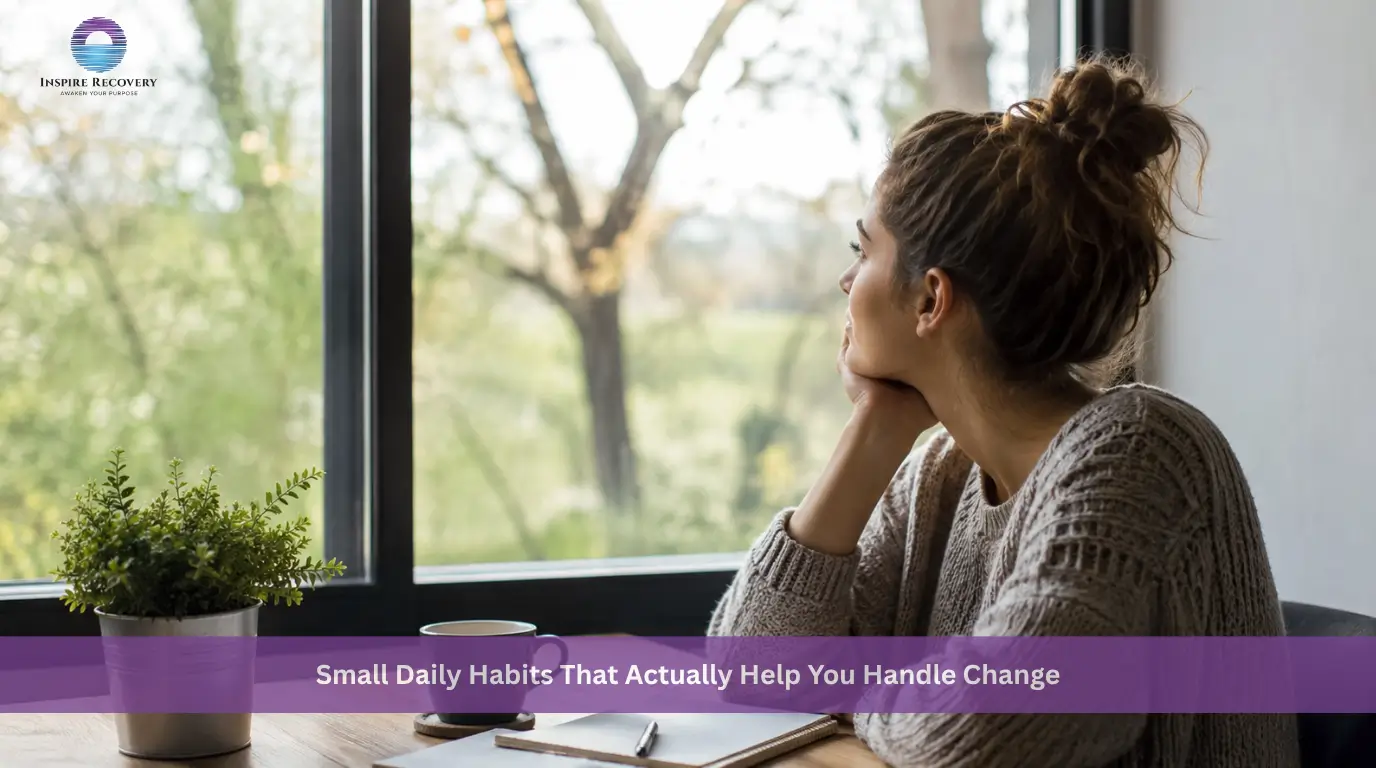
Change has a way of showing up whether you’re ready for it or not. A new season, a new job, a move, a loss, a shift in your relationships. Sometimes it’s exciting. Sometimes it knocks the wind out of you. Either way, the thing that gets people through it isn’t some grand life overhaul. It’s the small, unglamorous stuff you do every single day.
Honestly, that’s the part nobody tells you. You don’t need a perfect plan for transitions to feel manageable. You need a handful of habits you can lean on when everything else feels uncertain. Let’s walk through what those habits actually look like.
Give Your Days Some Shape
Here’s the thing about routine: it’s not about controlling everything around you, because you can’t. It’s about giving yourself something steady to stand on when the rest of life feels wobbly. Even a loose structure, wake up around the same time, eat breakfast, take five minutes before you dive into your inbox, can make a chaotic day feel a little more like yours.
A morning ritual is a good place to start. It doesn’t have to be complicated. Stretch for a few minutes, sip your coffee slowly instead of gulping it in the car, journal a couple of lines, whatever fits your actual life. The goal isn’t perfection. It’s consistency, because that’s what tells your nervous system, okay, we’ve got this.
Protect Your Sleep Like It Matters (Because It Does)
Sleep is one of those things everyone knows is important and almost everyone shortchanges anyway. But when you’re going through a transition, whether it’s a happy one or a hard one, sleep is often the first thing that quietly falls apart. And that makes everything else harder.
Try to keep a consistent bedtime, even on weekends. Build in a wind-down period where you’re not scrolling your phone right up until your eyes close. A few nights of decent sleep won’t erase whatever you’re navigating, but they will give you more patience, sharper thinking, and a steadier mood to face it with.
Step Outside, Even Just for a Minute
There’s real science behind why time outdoors makes you feel better, but you probably already know it from experience. A short walk clears your head in a way that scrolling never will. Sunlight on your face does something a screen just can’t replicate.
You don’t need a hike or a whole afternoon at the park. Sit on your porch for ten minutes. Walk the block after dinner. Eat your lunch outside instead of at your desk. These small doses of fresh air add up, and they’re one of the easiest ways to reset when a transition has you feeling stuck in your own head.
Feed Yourself Well (Water Counts Too)
When life gets busy or stressful, food is usually the first thing that gets neglected. Meals turn into whatever’s fastest, water gets replaced by another cup of coffee, and suddenly you’re running on fumes without realizing it.
Staying hydrated and eating foods that actually nourish you isn’t about strict rules or cutting things out. It’s about noticing that your body needs fuel to help you think clearly and stay steady, especially when you’re adapting to something new. Keep a water bottle nearby. Add one more vegetable to your plate. Small shifts, real impact.

Stay Connected to Your People
It’s tempting to pull inward when things feel uncertain. But isolation almost always makes transitions harder, not easier. You need people around you, even if it’s just one or two, who you can talk to, laugh with, or simply exist alongside.
This doesn’t have to mean joining five new clubs. Say yes to that coffee invite. Volunteer somewhere that matters to you. Show up to the neighborhood event you’d normally skip. Community reminds you that you’re not doing this alone, and that reminder matters more than people realize.
Watch for the Seasonal Slump
As daylight shortens in the fall and winter, a lot of people notice their mood shifting too. That’s not just “the winter blues.” For some people it’s Seasonal Affective Disorder, or SAD, a real form of depression tied to the changing seasons and shrinking daylight hours.
If you notice yourself feeling low, unmotivated, or foggy as the seasons turn, don’t just push through it and hope it passes. Get outside during daylight hours whenever you can, even on gray days. Light therapy can genuinely help if natural light is hard to come by. And stay close to the people who support you rather than pulling away, because isolation tends to make seasonal depression worse. If what you’re feeling sticks around or starts affecting your daily life, that’s worth bringing to a professional, not something to white-knuckle through alone.
A Few Reminders to Keep Close
● Start small. One new habit at a time beats five you’ll abandon by Thursday.
● Keep a simple sleep journal so you can actually see your patterns instead of guessing.
● Aim for about 30 minutes outside each day, even if it’s broken up into small chunks.
● Check in with your hydration and meals, especially on your busiest days.
● Look for community activities that genuinely interest you, not just ones you feel obligated to attend.
You Don’t Have to Do This Perfectly
None of these habits are about doing life flawlessly. They’re small, doable ways to give yourself a little more steadiness while everything around you shifts. Some days you’ll manage all of them. Other days you’ll barely manage one, and that’s fine too. Self-care during a transition isn’t a checklist you have to finish. It’s a practice you keep coming back to.
Tell someone in your life about a self-care habit that’s actually helped you. Chances are, they’re navigating a transition of their own and could use the reminder.
Above all, pay attention to how you’re really doing, not just how you’re pretending to be doing. If a season of change is wearing on you more than you expected, we’re here. Explore our resources for support, or reach out today. You don’t have to navigate this transition on your own.
Start Your Journey to a Healthier, Happier You
Take the first step today – connect with a compassionate therapist who meets you where you are.
Start Your Journey to a Healthier, Happier You
Take the first step today – connect with a compassionate therapist who meets you where you are.
What are some simple habits for handling life transitions?
Honestly? It’s not complicated. Keep a routine, get real sleep, get outside, eat something that isn’t just coffee, and stay close to people who get you. None of that’s exciting, but that’s why it works. Small stuff, done consistently, carries you further than you’d think.
How does a daily routine help during times of change?
Look, a routine can’t stop your world from shifting, but it gives you one steady thing to grab onto while it does. Waking up at the same time or having a five minute ritual sounds small, but it quietly says, okay, I’ve still got this.
What is Seasonal Affective Disorder and how is it related to transitions?
Ever notice your mood dip once the days get shorter? You’re not imagining it. That’s Seasonal Affective Disorder, a legitimate form of depression tied to fall and winter’s fading daylight, and it deserves just as much attention as any other kind of hard transition.
How can spending time outdoors support mental health during transitions?
You really don’t need a big hike or a whole afternoon. Ten minutes on your porch, a walk around the block, sunlight actually hitting your face, that’s enough. It’s a small reset, but it works wonders when a transition has your head spinning.
When should someone seek professional support during a difficult transition?
If things start creeping into your sleep, your relationships, or your ability to function day to day, that’s your cue. You don’t need to white-knuckle it alone. Reaching out to a professional sooner rather than later almost always makes the whole thing easier.
Change has a way of showing up whether you’re ready for it or not. A new season, a new job, a move, a loss, a shift in your relationships. Sometimes it’s exciting. Sometimes it knocks the wind out of you. Either way, the thing that gets people through it isn’t some grand life overhaul. It’s the small, unglamorous stuff you do every single day.
Honestly, that’s the part nobody tells you. You don’t need a perfect plan for transitions to feel manageable. You need a handful of habits you can lean on when everything else feels uncertain. Let’s walk through what those habits actually look like.
Give Your Days Some Shape
Here’s the thing about routine: it’s not about controlling everything around you, because you can’t. It’s about giving yourself something steady to stand on when the rest of life feels wobbly. Even a loose structure, wake up around the same time, eat breakfast, take five minutes before you dive into your inbox, can make a chaotic day feel a little more like yours.
A morning ritual is a good place to start. It doesn’t have to be complicated. Stretch for a few minutes, sip your coffee slowly instead of gulping it in the car, journal a couple of lines, whatever fits your actual life. The goal isn’t perfection. It’s consistency, because that’s what tells your nervous system, okay, we’ve got this.
Protect Your Sleep Like It Matters (Because It Does)
Sleep is one of those things everyone knows is important and almost everyone shortchanges anyway. But when you’re going through a transition, whether it’s a happy one or a hard one, sleep is often the first thing that quietly falls apart. And that makes everything else harder.
Try to keep a consistent bedtime, even on weekends. Build in a wind-down period where you’re not scrolling your phone right up until your eyes close. A few nights of decent sleep won’t erase whatever you’re navigating, but they will give you more patience, sharper thinking, and a steadier mood to face it with.
Step Outside, Even Just for a Minute
There’s real science behind why time outdoors makes you feel better, but you probably already know it from experience. A short walk clears your head in a way that scrolling never will. Sunlight on your face does something a screen just can’t replicate.
You don’t need a hike or a whole afternoon at the park. Sit on your porch for ten minutes. Walk the block after dinner. Eat your lunch outside instead of at your desk. These small doses of fresh air add up, and they’re one of the easiest ways to reset when a transition has you feeling stuck in your own head.
Feed Yourself Well (Water Counts Too)
When life gets busy or stressful, food is usually the first thing that gets neglected. Meals turn into whatever’s fastest, water gets replaced by another cup of coffee, and suddenly you’re running on fumes without realizing it.
Staying hydrated and eating foods that actually nourish you isn’t about strict rules or cutting things out. It’s about noticing that your body needs fuel to help you think clearly and stay steady, especially when you’re adapting to something new. Keep a water bottle nearby. Add one more vegetable to your plate. Small shifts, real impact.
Stay Connected to Your People
It’s tempting to pull inward when things feel uncertain. But isolation almost always makes transitions harder, not easier. You need people around you, even if it’s just one or two, who you can talk to, laugh with, or simply exist alongside.
This doesn’t have to mean joining five new clubs. Say yes to that coffee invite. Volunteer somewhere that matters to you. Show up to the neighborhood event you’d normally skip. Community reminds you that you’re not doing this alone, and that reminder matters more than people realize.
Watch for the Seasonal Slump
As daylight shortens in the fall and winter, a lot of people notice their mood shifting too. That’s not just “the winter blues.” For some people it’s Seasonal Affective Disorder, or SAD, a real form of depression tied to the changing seasons and shrinking daylight hours.
If you notice yourself feeling low, unmotivated, or foggy as the seasons turn, don’t just push through it and hope it passes. Get outside during daylight hours whenever you can, even on gray days. Light therapy can genuinely help if natural light is hard to come by. And stay close to the people who support you rather than pulling away, because isolation tends to make seasonal depression worse. If what you’re feeling sticks around or starts affecting your daily life, that’s worth bringing to a professional, not something to white-knuckle through alone.
A Few Reminders to Keep Close
● Start small. One new habit at a time beats five you’ll abandon by Thursday.
● Keep a simple sleep journal so you can actually see your patterns instead of guessing.
● Aim for about 30 minutes outside each day, even if it’s broken up into small chunks.
● Check in with your hydration and meals, especially on your busiest days.
● Look for community activities that genuinely interest you, not just ones you feel obligated to attend.
You Don’t Have to Do This Perfectly
None of these habits are about doing life flawlessly. They’re small, doable ways to give yourself a little more steadiness while everything around you shifts. Some days you’ll manage all of them. Other days you’ll barely manage one, and that’s fine too. Self-care during a transition isn’t a checklist you have to finish. It’s a practice you keep coming back to.
Tell someone in your life about a self-care habit that’s actually helped you. Chances are, they’re navigating a transition of their own and could use the reminder.
Above all, pay attention to how you’re really doing, not just how you’re pretending to be doing. If a season of change is wearing on you more than you expected, we’re here. Explore our resources for support, or reach out today. You don’t have to navigate this transition on your own.
Start Your Journey to a Healthier, Happier You
Take the first step today – connect with a compassionate therapist who meets you where you are.
What are some simple habits for handling life transitions?
Honestly? It’s not complicated. Keep a routine, get real sleep, get outside, eat something that isn’t just coffee, and stay close to people who get you. None of that’s exciting, but that’s why it works. Small stuff, done consistently, carries you further than you’d think.
How does a daily routine help during times of change?
Look, a routine can’t stop your world from shifting, but it gives you one steady thing to grab onto while it does. Waking up at the same time or having a five minute ritual sounds small, but it quietly says, okay, I’ve still got this.
What is Seasonal Affective Disorder and how is it related to transitions?
Ever notice your mood dip once the days get shorter? You’re not imagining it. That’s Seasonal Affective Disorder, a legitimate form of depression tied to fall and winter’s fading daylight, and it deserves just as much attention as any other kind of hard transition.
How can spending time outdoors support mental health during transitions?
You really don’t need a big hike or a whole afternoon. Ten minutes on your porch, a walk around the block, sunlight actually hitting your face, that’s enough. It’s a small reset, but it works wonders when a transition has your head spinning.
When should someone seek professional support during a difficult transition?
If things start creeping into your sleep, your relationships, or your ability to function day to day, that’s your cue. You don’t need to white-knuckle it alone. Reaching out to a professional sooner rather than later almost always makes the whole thing easier.
Latest News

Panic Attacks vs. Anxiety Attacks: What’s the Difference and What Helps
Postpartum Mental Health: Supporting New Parents Through the Fourth Trimester
Burnout Recovery: How to Reclaim Your Mental Health After Workplace Stress

Group Therapy vs. Individual Therapy: Which One Actually Fits You
How to Support Mental Health: A Guide for National Suicide Prevention Awareness Month
Blogs