Table of Content
Title


Connect with us to begin your healing journey today.
Take the first step today—connect with a compassionate therapist who meets you where you are.

Connect with us to begin your healing journey today.
Take the first step today—connect with a compassionate therapist who meets you where you are.
Finding Calm in Chaos: Mindfulness Techniques That Actually Work
Finding Calm in Chaos: Mindfulness Techniques That Actually Work
Finding Calm in Chaos: Mindfulness Techniques That Actually Work
Finding Calm in Chaos: Mindfulness Techniques That Actually Work
by Inspire Recovery Staff
5 Min
Mental Health
You’re stressed. Like, really stressed. Between work, relationships, and all the stuff that just keeps throwing you curveballs, it feels like you’re barely keeping your head above water.
Here’s the good news: you don’t need anything fancy to feel better. You don’t even need to leave your house. What you need is just a little bit of presence.
Mindfulness sounds like some complicated zen thing, but honestly, it’s just about showing up in your own life. Let me walk you through these mindfulness techniques.
Stop Running
Stress is basically your brain yanking you in every direction at once. You’re stuck thinking about yesterday while freaking out about tomorrow. Meanwhile, today just passes you by.
What if you could just stop for a second? Not fix anything. Not solve anything. Just be here.
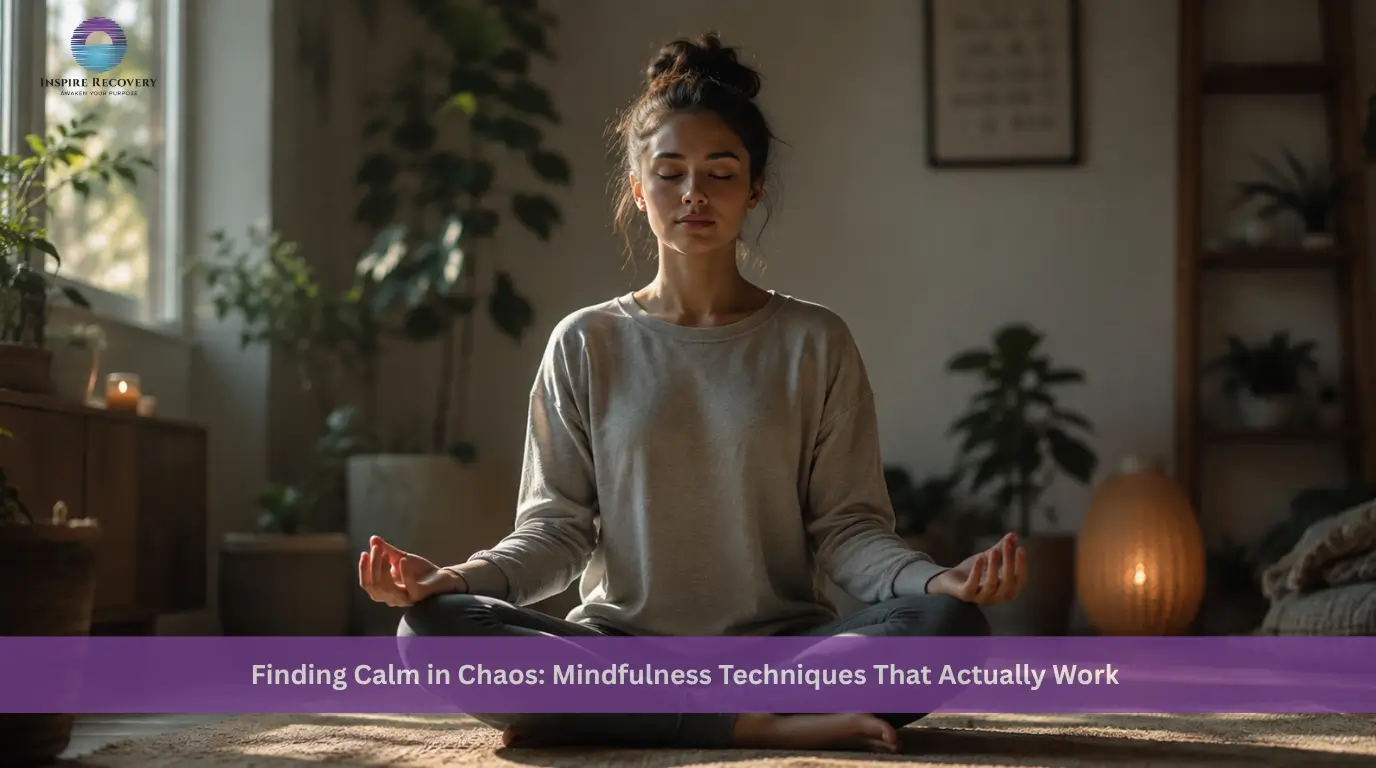
Here’s how you start. Sit down somewhere that’s comfortable. Close your eyes. Take some deep breaths. Feel the air coming in and out. Notice your body sitting there. That’s literally it. That’s the whole practice. No performing, no perfect way to do it. Just you, breathing, existing.
Your Breath Keeps You Grounded
When life feels totally out of control, your breath is the one thing you actually have.
Find a quiet corner. Get comfortable, sitting or lying down. Breathe in slowly through your nose, all the way down to your belly. Then exhale through your mouth. Notice your chest moving up and down. That rhythm. That’s your anchor.
Your mind’s gonna wander. That’s fine, that’s totally normal. When it does, just bring your attention back to the breath. Do this for like five minutes. Sounds simple? Because it is. And it actually works.
Your Body’s Been Holding Stress You Don’t Even Know About
Tension doesn’t just live in your head. It lives in your neck, your shoulders, your lower back. Places you forgot were tense until you actually pay attention.
Lie down. Close your eyes. Slowly move your focus from the top of your head all the way down to your toes. Notice where things feel tight. Breathe into those spots. When you exhale, just imagine that tightness melting away. Try this body scan meditation to release what you’ve been holding, especially if past trauma is involved.
Remember That Good Things Still Exist
When you’re stressed, your brain becomes a problem detector. It’s like that’s all it can see anymore.
Do this daily. Write down or just think about three things you’re grateful for. Could be a decent cup of coffee. A friend who made you laugh. Ten minutes where you weren’t thinking about your problems. That’s enough. You’re not pretending everything’s great. You’re just remembering that good and hard can exist at the same time. That does something real to your nervous system.

Sometimes You Just Need to Walk
Can’t meditate sitting still? I get it. Try walking instead.
Pay attention to each step. Feel your feet on the ground. Notice your arms moving, your body moving forward. When your brain starts going a million miles an hour, bring it back to the walking. You’re not going anywhere specific. You’re just present while you move. It’s weirdly grounding.
Actually Be Kind to Yourself
Loving-kindness meditation sounds kinda hippy dippy, but I’m telling you it works. When you’re stressed, you end up isolated from everyone, including yourself.
Find a quiet moment. Say this to yourself: “May I be happy. May I be healthy. May I be safe. May I be at ease.” Then say it for the people you love. The people you kinda know. Even the people who drive you up the wall. You’re not forgiving them or anything. You’re just softening your own edges a little bit. The peace you feel after is real.
Write Down What’s Happening
Getting your thoughts out of your head and onto paper changes something. You stop spinning and start seeing.
Spend five minutes just writing. Dump whatever’s bothering you. The fears, the frustrations, the patterns you’re noticing. When you see it on paper, you realize what’s actually triggering your stress. And once you know that, you can actually do something about it differently next time.
Be Real About This
These techniques actually work. But let’s be honest, they’re not a magic fix. They take practice. Some days they’ll feel easy. Other days they’ll feel impossible. That’s normal.
If you’re really struggling, get help. Talk to a therapist, join a group, lean on someone you trust. You don’t have to figure this out by yourself. If you’re dealing with anxiety alongside stress, anxiety counseling can give you tools tailored to both. Don’t hesitate to seek professional support when you need it.
Mindfulness is really just about being a little gentler with yourself when everything feels chaotic. The more you do it, you’ll realize something. Calm isn’t something you’re hunting for. It’s already inside you, waiting. You just have to stop running long enough to find it.
Start Your Journey to a Healthier, Happier You
Take the first step today – connect with a compassionate therapist who meets you where you are.
Start Your Journey to a Healthier, Happier You
Take the first step today – connect with a compassionate therapist who meets you where you are.
Frequently Asked Questions
How long does it take for mindfulness to actually work?
Most people feel calmer within five minutes of practice. Real changes happen over weeks and months. Practice five minutes daily. Consistency matters more than duration. You’ll notice your stress response shifting faster than you think.
What if I can’t stop my mind from wandering during meditation?
Mind wandering isn’t failure. It’s the point of practice. Your brain’s job is to think. When you notice wandering, gently redirect to breath. You’re literally training your mind. Each refocus strengthens it.
Do I need to be spiritual or religious to practice mindfulness?
No. Mindfulness is present moment awareness. Works for religious, atheist, or anyone in between. No belief system required at all. It’s practical, not spiritual. A simple skill anyone can learn and practice.
Can I do these techniques if I have anxiety or depression?
Yes, but be gentle with yourself. Mindfulness helps many with anxiety and depression. Start slowly. If sitting feels impossible, try walking meditation first. Talk to your therapist about what works best for you.
How do I know if mindfulness is actually helping me?
You’ll notice better sleep, less reactivity to stress, feeling calmer overall. Fewer triggers affect you. Changes are subtle at first. Practice consistently for two weeks minimum before deciding. Most people see results within one month.
You’re stressed. Like, really stressed. Between work, relationships, and all the stuff that just keeps throwing you curveballs, it feels like you’re barely keeping your head above water.
Here’s the good news: you don’t need anything fancy to feel better. You don’t even need to leave your house. What you need is just a little bit of presence.
Mindfulness sounds like some complicated zen thing, but honestly, it’s just about showing up in your own life. Let me walk you through these mindfulness techniques.
Stop Running
Stress is basically your brain yanking you in every direction at once. You’re stuck thinking about yesterday while freaking out about tomorrow. Meanwhile, today just passes you by.
What if you could just stop for a second? Not fix anything. Not solve anything. Just be here.
Here’s how you start. Sit down somewhere that’s comfortable. Close your eyes. Take some deep breaths. Feel the air coming in and out. Notice your body sitting there. That’s literally it. That’s the whole practice. No performing, no perfect way to do it. Just you, breathing, existing.
Your Breath Keeps You Grounded
When life feels totally out of control, your breath is the one thing you actually have.
Find a quiet corner. Get comfortable, sitting or lying down. Breathe in slowly through your nose, all the way down to your belly. Then exhale through your mouth. Notice your chest moving up and down. That rhythm. That’s your anchor.
Your mind’s gonna wander. That’s fine, that’s totally normal. When it does, just bring your attention back to the breath. Do this for like five minutes. Sounds simple? Because it is. And it actually works.
Your Body’s Been Holding Stress You Don’t Even Know About
Tension doesn’t just live in your head. It lives in your neck, your shoulders, your lower back. Places you forgot were tense until you actually pay attention.
Lie down. Close your eyes. Slowly move your focus from the top of your head all the way down to your toes. Notice where things feel tight. Breathe into those spots. When you exhale, just imagine that tightness melting away. Try this body scan meditation to release what you’ve been holding, especially if past trauma is involved.
Remember That Good Things Still Exist
When you’re stressed, your brain becomes a problem detector. It’s like that’s all it can see anymore.
Do this daily. Write down or just think about three things you’re grateful for. Could be a decent cup of coffee. A friend who made you laugh. Ten minutes where you weren’t thinking about your problems. That’s enough. You’re not pretending everything’s great. You’re just remembering that good and hard can exist at the same time. That does something real to your nervous system.
Sometimes You Just Need to Walk
Can’t meditate sitting still? I get it. Try walking instead.
Pay attention to each step. Feel your feet on the ground. Notice your arms moving, your body moving forward. When your brain starts going a million miles an hour, bring it back to the walking. You’re not going anywhere specific. You’re just present while you move. It’s weirdly grounding.
Actually Be Kind to Yourself
Loving-kindness meditation sounds kinda hippy dippy, but I’m telling you it works. When you’re stressed, you end up isolated from everyone, including yourself.
Find a quiet moment. Say this to yourself: “May I be happy. May I be healthy. May I be safe. May I be at ease.” Then say it for the people you love. The people you kinda know. Even the people who drive you up the wall. You’re not forgiving them or anything. You’re just softening your own edges a little bit. The peace you feel after is real.
Write Down What’s Happening
Getting your thoughts out of your head and onto paper changes something. You stop spinning and start seeing.
Spend five minutes just writing. Dump whatever’s bothering you. The fears, the frustrations, the patterns you’re noticing. When you see it on paper, you realize what’s actually triggering your stress. And once you know that, you can actually do something about it differently next time.
Be Real About This
These techniques actually work. But let’s be honest, they’re not a magic fix. They take practice. Some days they’ll feel easy. Other days they’ll feel impossible. That’s normal.
If you’re really struggling, get help. Talk to a therapist, join a group, lean on someone you trust. You don’t have to figure this out by yourself. If you’re dealing with anxiety alongside stress, anxiety counseling can give you tools tailored to both. Don’t hesitate to seek professional support when you need it.
Mindfulness is really just about being a little gentler with yourself when everything feels chaotic. The more you do it, you’ll realize something. Calm isn’t something you’re hunting for. It’s already inside you, waiting. You just have to stop running long enough to find it.
Start Your Journey to a Healthier, Happier You
Take the first step today – connect with a compassionate therapist who meets you where you are.
Frequently Asked Questions
How long does it take for mindfulness to actually work?
Most people feel calmer within five minutes of practice. Real changes happen over weeks and months. Practice five minutes daily. Consistency matters more than duration. You’ll notice your stress response shifting faster than you think.
What if I can’t stop my mind from wandering during meditation?
Mind wandering isn’t failure. It’s the point of practice. Your brain’s job is to think. When you notice wandering, gently redirect to breath. You’re literally training your mind. Each refocus strengthens it.
Do I need to be spiritual or religious to practice mindfulness?
No. Mindfulness is present moment awareness. Works for religious, atheist, or anyone in between. No belief system required at all. It’s practical, not spiritual. A simple skill anyone can learn and practice.
Can I do these techniques if I have anxiety or depression?
Yes, but be gentle with yourself. Mindfulness helps many with anxiety and depression. Start slowly. If sitting feels impossible, try walking meditation first. Talk to your therapist about what works best for you.
How do I know if mindfulness is actually helping me?
You’ll notice better sleep, less reactivity to stress, feeling calmer overall. Fewer triggers affect you. Changes are subtle at first. Practice consistently for two weeks minimum before deciding. Most people see results within one month.
Latest News
Panic Attacks vs. Anxiety Attacks: What’s the Difference and What Helps
Postpartum Mental Health: Supporting New Parents Through the Fourth Trimester
Burnout Recovery: How to Reclaim Your Mental Health After Workplace Stress

Group Therapy vs. Individual Therapy: Which One Actually Fits You
How to Support Mental Health: A Guide for National Suicide Prevention Awareness Month
Blogs