Most people first hear about EMDR (Eye Movement Desensitization and Reprocessing) in the context of trauma and PTSD, where its track record is well established. So it surprises people to learn that it’s also used for anxiety. The connection makes sense once you understand what EMDR actually does and how often anxiety has roots that aren’t obvious on the surface.
Anxiety Often Has a History
Not all anxiety, but a good deal of it, traces back to specific experiences: sometimes a clear event, sometimes a pattern of smaller moments that taught the nervous system the world wasn’t safe. A person with intense social anxiety may be carrying a humiliating experience from years ago. Someone with health anxiety may have lived through a frightening illness, their own or a loved one’s. The present-day worry is often the visible end of something older.
When that’s the case, managing the symptoms can help, but it doesn’t address the source. EMDR works on the source: the stored memories and beliefs that keep the alarm system primed.
What EMDR Actually Does
The theory behind EMDR is that distressing experiences can get “stuck,” stored in the brain in a way that keeps them active, so that reminders trigger the same alarm as the original event. EMDR uses bilateral stimulation, typically guided eye movements, while you briefly focus on the distressing material. This appears to help the brain reprocess the memory and file it away properly, so it loses its emotional charge.
For anxiety, this means targeting the experiences and core beliefs feeding the worry, such as “I’m in danger,” “I’m not safe,” “I can’t handle this,” and helping the brain update them. People often describe the shift not as forgetting, but as remembering without the same grip of fear.
What an EMDR Session Is Like
- Early sessions focus on history and on building resources: grounding and calming skills you’ll use throughout.
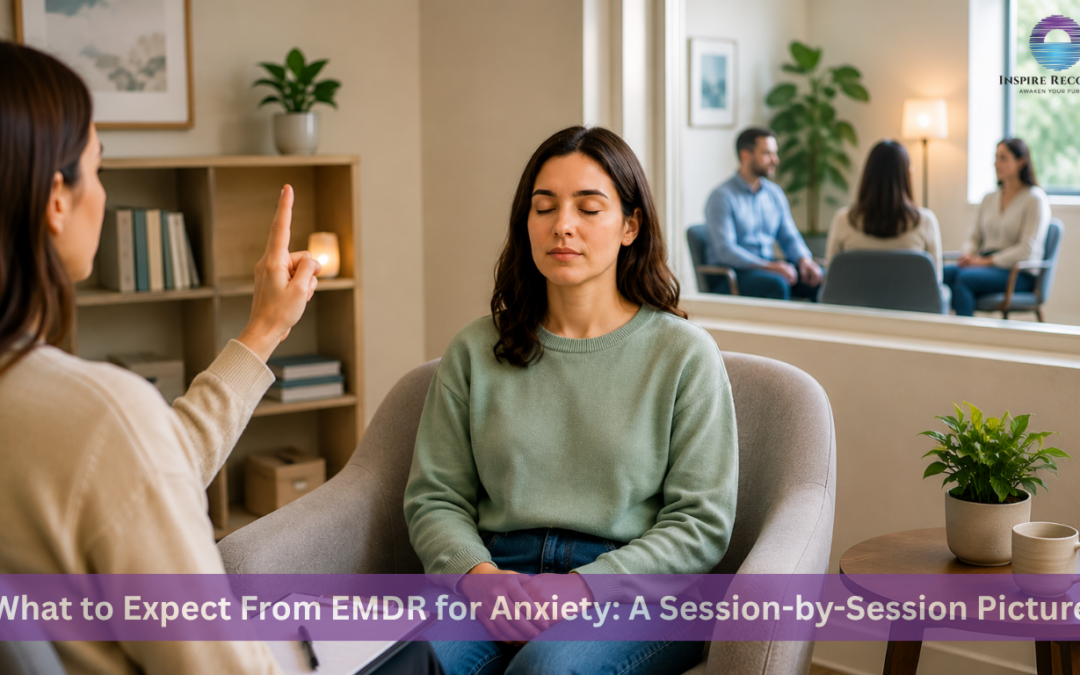
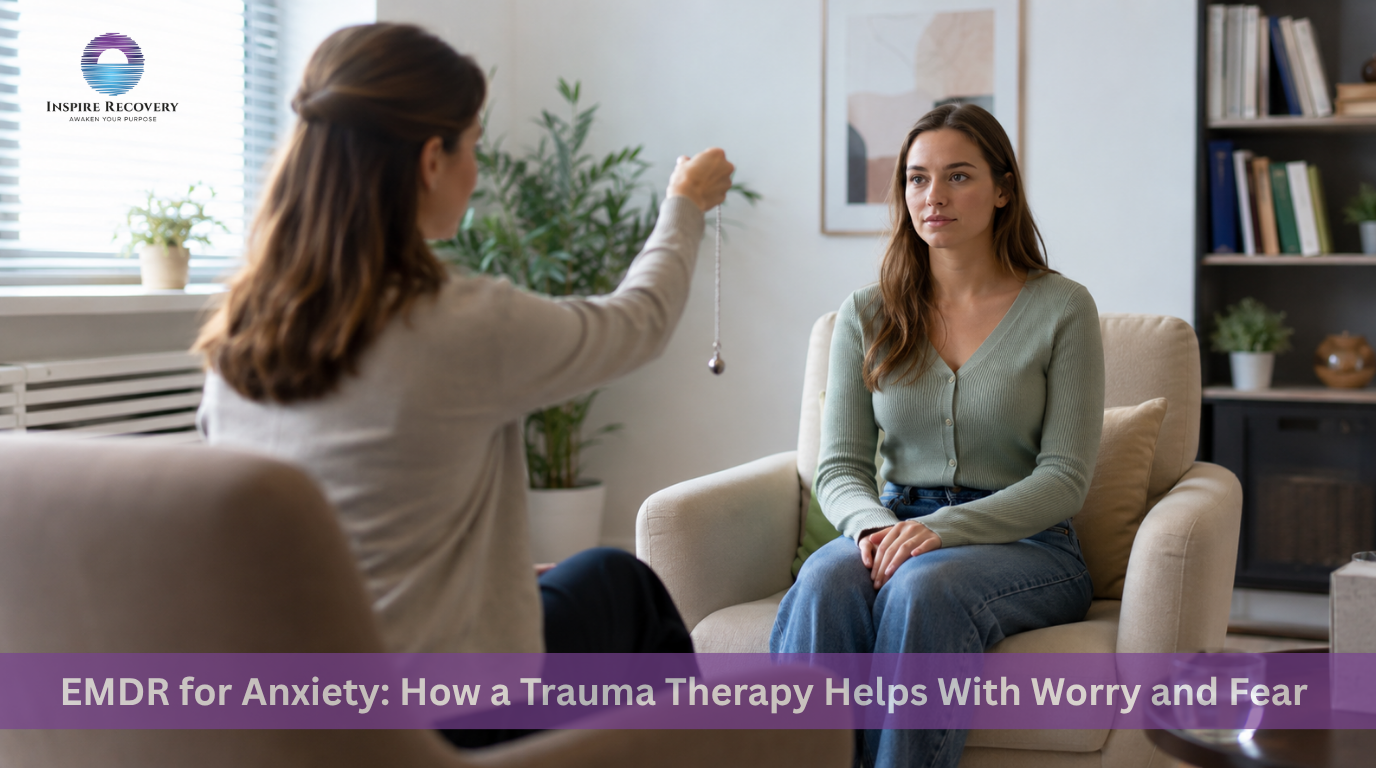
- In processing sessions, you hold a target memory or anxious belief in mind while following a back-and-forth stimulus, usually the therapist’s hand or a light.
- You’re fully awake and in control the entire time. EMDR is not hypnosis, and you don’t have to narrate every detail aloud.
- Over sessions, the distress attached to the target tends to drop, and more adaptive beliefs take hold.
When EMDR Is a Strong Fit, and When It Isn’t
EMDR tends to work especially well when anxiety connects to identifiable experiences. For generalized anxiety with no clear origin, approaches like CBT may be a better starting point, though EMDR can still play a role. A proper assessment is how we figure out which approach, or combination, fits your situation. There’s no single right answer for everyone.
EMDR doesn’t erase the past. It changes how the past lives in your present.

How EMDR Differs From Talk Therapy
People sometimes ask why they couldn’t simply talk through the experiences feeding their anxiety in ordinary therapy. For some, talking helps a great deal. But many people have already talked about what happened, sometimes for years, and find that understanding it intellectually hasn’t changed how their body reacts. They know, rationally, that they’re safe, and still feel the alarm. EMDR works at a level beneath the verbal, helping the brain reprocess the stored material itself rather than just discussing it. That is why people often describe a shift that talk alone never produced: the same memory, suddenly without the charge.
This doesn’t make EMDR superior to other approaches across the board. It makes it well-suited to a particular problem: anxiety anchored in experiences the nervous system hasn’t finished filing away. Knowing which problem you have is what the assessment is for.
What People Notice Afterward
When EMDR is working, people tend to report changes that show up in daily life rather than just in session. A situation that used to spike their anxiety produces a smaller reaction, or none. A belief like “I can’t handle this” quietly stops feeling true. The memory that used to intrude becomes something they can think about without bracing. These shifts often feel less like effortful coping and more like something settling on its own, which is, in a sense, exactly what’s happening, as the brain finishes processing what it had been holding.
Is EMDR Right for Your Anxiety?
If anxiety has been running your life and you suspect it’s tied to things you’ve been through, EMDR may be worth exploring. Our team uses it as part of a tailored approach to anxiety treatment. Reach out for an assessment and we’ll talk honestly about whether it’s the right tool for you.
Start Your Journey to a Healthier, Happier You
Take the first step today – connect with a compassionate therapist who meets you where you are.
Frequently Asked Questions
Q. Is EMDR only for trauma, or can it help my anxiety too?
Honestly, both. EMDR got its reputation treating trauma, but so much anxiety is trauma’s quieter cousin, tied to old moments your body never fully let go of. Instead of just coping with the worry, EMDR helps you work through what’s actually feeding it.
Q. What’s it actually like to sit through a session?
Nothing like the movies. You start by building trust and a few calming tools with your therapist. Later, you’ll hold a memory or fear in mind while following their hand or a light. You’re never “under.” You’re awake, aware, and steering the whole time.
Q. I’ve talked about this for years. Why would EMDR be any different?
That’s such a common feeling, and it’s not you doing something wrong. Talking helps you understand your anxiety, but your body doesn’t always get the memo. EMDR works underneath the words, so your brain can finally let go of what your mind already knew.
Q. Will EMDR work for my anxiety specifically?
It depends a bit on where your anxiety comes from. If you can point to a moment or experience it seems to trace back to, EMDR tends to do really well. If it feels more like a constant hum with no clear starting point, we might lean on something like CBT instead, or alongside it.
Q. How will I know it’s actually working?
It’s rarely dramatic. More often, you’ll notice something that used to wreck your whole day barely touches you now. A thought like “I can’t handle this” starts to feel less true. People often describe it as relief settling in quietly, rather than something they had to fight for.