A lot of people who would benefit from trauma therapy never start, because the word itself feels too big. They think trauma means combat, or a single catastrophic event, or something dramatic enough to “qualify.” In clinical terms, trauma is simply the lasting imprint of an experience that overwhelmed your ability to cope at the time. That definition includes a great deal of ordinary human suffering that people quietly carry for years.
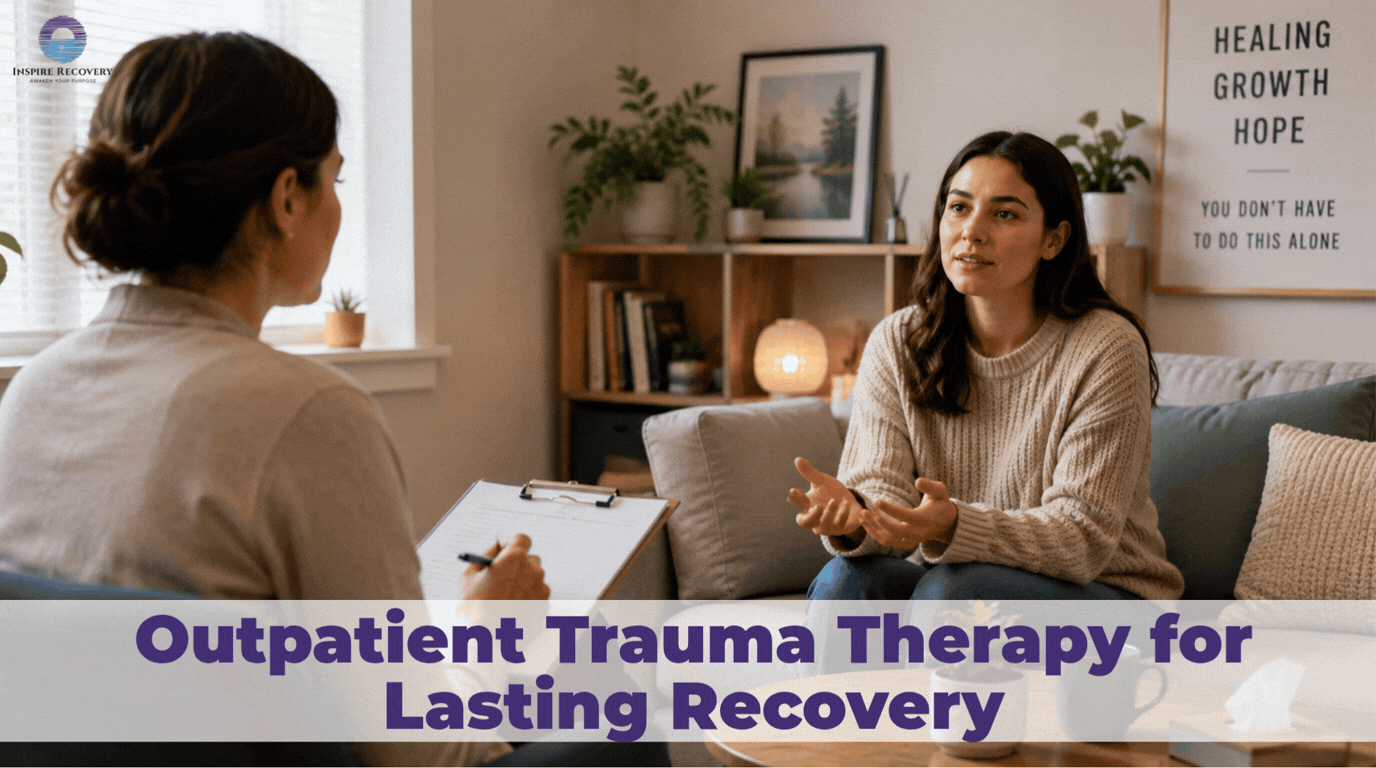
Outpatient trauma therapy is treatment you attend while living your regular life: going to work, raising your family, sleeping in your own bed. You come in for sessions, usually weekly, and you do the work over time. For most people, this is the right level of care. It offers real treatment without removing you from the life you’re trying to get back to.
What the First Few Sessions Involve
Good trauma therapy does not begin with the trauma. It begins with stabilization, making sure you have the footing to do deeper work safely. Early sessions tend to focus on understanding your history, identifying your symptoms, and building practical skills for managing distress.
- A thorough assessment, so treatment is matched to what you’re actually dealing with rather than a generic protocol.
- Education about how trauma affects the nervous system, which often comes as a relief, because it explains reactions that felt irrational.
- Grounding and regulation tools you can use immediately, before any deeper processing begins.
- A collaborative plan, so you know where the work is headed and why.
The Treatments Themselves
There is no single “trauma therapy.” At Inspire Recovery we draw on evidence-based approaches and match them to the person. For some, that’s EMDR. For others, a cognitive-behavioral trauma model, or trauma-focused work integrated with treatment for substance use or anxiety. The common thread is that these are structured, well-researched methods, not open-ended talk that circles the same ground for years.
That said, the relationship matters as much as the method. Trauma is, at its core, often an injury to trust and safety. The work happens inside a relationship where you feel safe enough to approach what you’ve been avoiding. No technique substitutes for that.

How Long Trauma Therapy Takes
This is the question everyone wants answered and no one can answer precisely. Some people experience meaningful relief in a few months. Others, particularly those with complex or repeated trauma, work for longer. What we can promise is direction: you should be able to feel movement, and we should be able to point to what we’re working toward and how we’ll know it’s working.
When Outpatient Is the Right Level of Care
Outpatient treatment fits most people seeking trauma therapy. It may not be enough on its own if you’re in acute crisis, actively unsafe, or struggling with severe untreated substance use that needs a higher level of care first. Part of a good assessment is being honest about that. If you need more than outpatient can offer, we’ll tell you, and help you find the right setting.
How Outpatient Differs from Higher Levels of Care
It can help to understand where outpatient sits in the broader landscape of treatment. Higher levels of care (partial hospitalization, intensive outpatient, residential) exist for situations where someone needs more structure, more hours, or more containment than a weekly session can provide. Outpatient therapy, by contrast, assumes you are stable enough to live your life between sessions and to do the work at a sustainable pace. For the majority of people seeking trauma treatment, that is exactly the right fit, and it has a real advantage: you are healing inside the life you actually live, rather than in a setting you eventually have to transition out of.
That said, the level of care isn’t always obvious from the outside, which is one more reason an assessment matters. Someone can appear to be managing while privately struggling far more than their functioning suggests. A good evaluation looks past the surface.
The Work Between Sessions
One thing people don’t always anticipate is how much of trauma therapy happens outside the room. The skills you build, grounding, regulation, noticing and naming what you feel, are meant to be used in daily life, not just demonstrated in session. Healing accelerates when what you learn on Tuesday afternoon shows up on Thursday night, when an old trigger surfaces and you have a tool ready. We’ll often give you specific things to practice, not as homework for its own sake, but because the nervous system learns through repetition in real situations.
None of this is meant to make treatment sound like a heavy lift. Much of it is simply learning to be present and steady in a body that has spent a long time bracing. But it is honest to say that trauma therapy is participatory. You are not a passenger in it, and that is precisely why it works.
Does What You Went Through Count?
If you’ve been wondering whether what you went through “counts,” let me put it plainly: if it’s still affecting how you live, it counts. Reaching out for an assessment doesn’t commit you to anything except a conversation. That’s often the hardest and most important step.
Start Your Journey to a Healthier, Happier You
Take the first step today – connect with a compassionate therapist who meets you where you are.
Frequently Asked Questions
Q. How do I know if what I went through counts as trauma?
Honestly, if it’s still with you, if it shows up in how you sleep, trust, or react, it counts. You don’t need a “big enough” story to justify getting help. Most people carrying trauma never had one dramatic moment. That’s exactly what we’re here to talk through.
Q. Will I have to talk about the trauma right away?
Not at all, and we wouldn’t want you to. We start by helping you feel steady and safe first. Rushing into the hard stuff before you’re ready usually backfires. So we take our time, build trust, and only go deeper once you’re truly ready for it.
Q. What’s the difference between EMDR and traditional talk therapy?
Talk therapy helps you process things by talking them through. EMDR works a bit differently, it helps your brain actually reprocess stuck memories, not just revisit them. We won’t hand you a one-size-fits-all plan. We’ll figure out together what actually fits how you heal.
Q. How long will I need to be in therapy?
We wish we could give you a neat timeline, but honestly, it depends on you. Some people feel lighter within months. Others need more time, and that’s okay too. What matters most is that you feel real movement and always know what we’re working toward together.
Q. What if I’m not sure outpatient therapy is enough for me?
That’s a completely fair question, and it’s exactly what an assessment is for. If you need more support than weekly sessions offer, we’ll tell you honestly and help you find it. Reaching out doesn’t commit you to anything. It’s just one honest conversation to start.