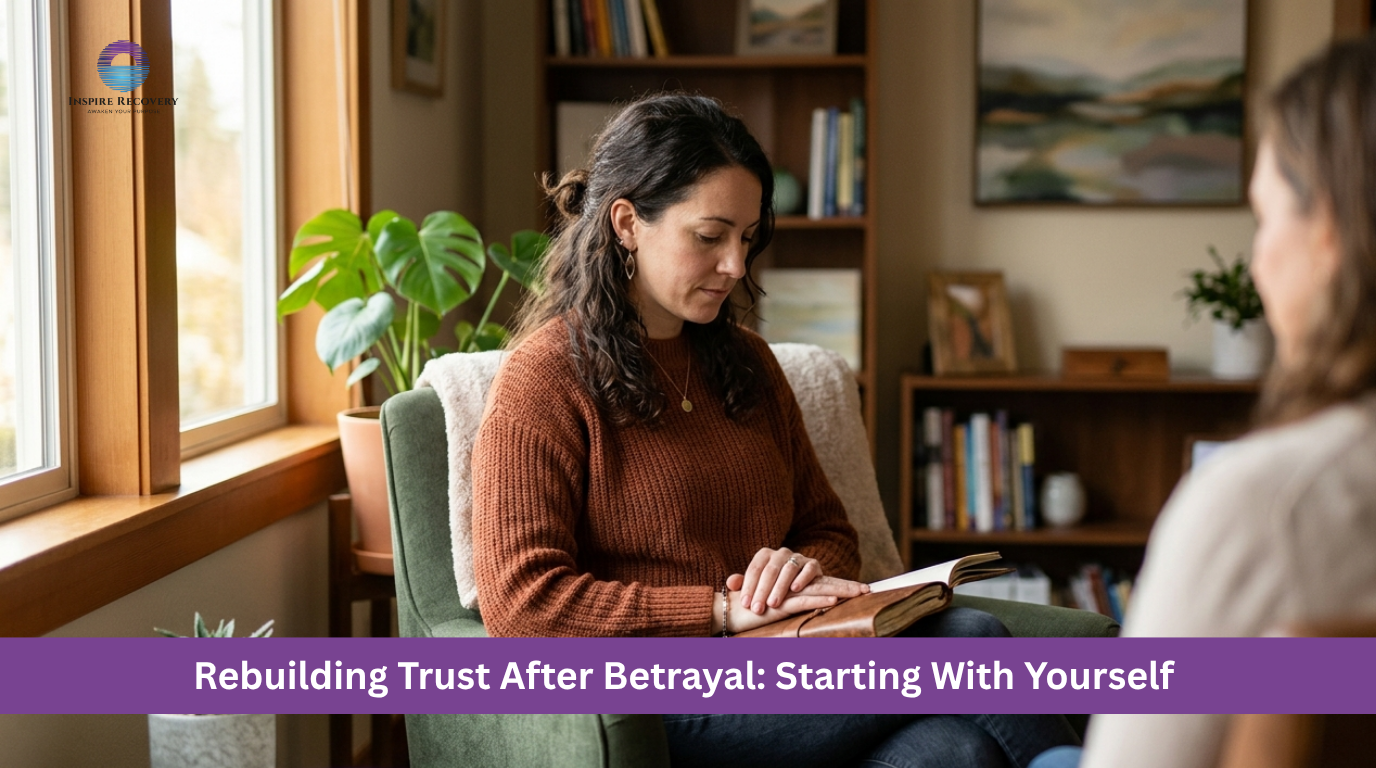
When someone comes in after a significant betrayal, whether that’s infidelity, a financial deception, or finding out a parent wasn’t who they seemed to be. The question they most want answered is usually about other people. Can I ever trust anyone again? Should I? It’s a natural place to start. But here’s the thing: it’s not actually where the work begins. The first repair happens closer to home. It’s about learning to trust yourself again.
Betrayal does something subtle and corrosive to a person. It teaches you that your read on reality was wrong, that you believed someone who didn’t deserve it, that you missed signs, that you trusted where you shouldn’t have. Whether or not any of that is actually fair to you, the lesson your nervous system absorbs is the same: my own judgment can’t be relied on. And once that conviction sets in, every future relationship gets filtered through it.
Why self-trust has to come first
Look, if you don’t trust your own perception, no amount of reassurance from someone else is going to land. You’ll second-guess it. You’ll wonder what you’re missing. Rebuilding the relationship with your own judgment is what makes trusting anyone else possible down the road, because at that point you’re relying on something steady: your own ability to read a situation, set a limit, and actually act on what you notice.
What that rebuilding actually looks like
● Reviewing what happened without self-blame. Betrayal often involves deliberate concealment, designed to be missed. It’s not a failure of your attention.
● Reconnecting with your instincts. A lot of people, looking back, realize they did sense something and talked themselves out of it. Relearning to honor that signal is central to this work.
● Practicing small acts of self-trust. Making decisions and following through slowly rebuilds the evidence that you can rely on yourself.
● Processing the trauma directly, so the betrayal stops hijacking the present. This is where structured approaches like EMDR often do meaningful work.

Trusting others again, on your own terms
Once self-trust feels steadier, the question of trusting others starts to change shape. It stops being a leap of faith and becomes something more measured: trust extended gradually, in proportion to what someone has actually demonstrated over time. That’s not cynicism. That’s discernment, and honestly, it’s a healthier foundation for connection than either blind trust or blanket suspicion.
Healthy trust isn’t the absence of caution. It’s caution that finally has somewhere to rest.
The timeline nobody likes hearing about
Here’s the truth: this work takes the time it takes. There’s no schedule that turns betrayal into a closed chapter by a certain date, and honestly, pressure to be “over it” tends to slow things down rather than speed them up. What you can expect is direction. The self-doubt loosens. The hypervigilance eases. And little by little, your sense of yourself as a competent reader of your own life comes back.
The trap of overcorrection
One pattern worth naming, because it’s so common, is overcorrection. After a betrayal, a lot of people swing hard in the opposite direction. They trust no one, they scan every relationship for deception, they treat ordinary human imperfection as evidence of impending harm. It feels like protection. In practice, it often extends the betrayal’s reach, letting the person who hurt you shape every relationship that comes after. A guarded life can become its own kind of prison, built out of the materials of a wound.
The goal isn’t to talk yourself out of caution. Caution earned through real experience is wisdom. The goal is to make that caution flexible again, so it responds to the actual person standing in front of you rather than to a ghost. That distinction, between vigilance that protects and vigilance that imprisons, is a big part of what recovery refines.
How therapy supports this process
In session, this looks like several things happening together: processing the betrayal itself so it stops intruding on the present, examining the beliefs it installed about your judgment, and rebuilding, through small and concrete experiences, the evidence that you can actually rely on yourself. For a lot of people, structured trauma processing like EMDR does meaningful work here, because betrayal often lodges in the body just as much as it lives in the story you tell about it. The pacing is yours. Nothing about this work should ever feel like being pushed back into the experience before you’re ready.
What people tend to find, given enough time and the right support, isn’t a return to who they were before. That version of you trusted without the knowledge you carry now. What they find instead is something sturdier: trust that has its eyes open.
If a betrayal is still shaping how you move through your relationships, that’s not a sign you’re weak or stuck. It’s a sign the injury hasn’t finished healing, and injuries heal better with the right support. We’re here in Wallingford whenever you’re ready to begin that work.
Start Your Journey to a Healthier, Happier You
Take the first step today – connect with a compassionate therapist who meets you where you are.
Frequently Asked Questions
Q. Why does rebuilding self-trust come before learning to trust others again?
Betrayal teaches you that your own judgment failed, so every new relationship gets filtered through doubt. Rebuilding self-trust first gives you a steady foundation. Once you trust your own perception again, you can extend trust to others based on evidence rather than fear.
Q. How does EMDR help with betrayal trauma?
EMDR helps process betrayal because trauma often lodges in the body, not just in the story you tell about it. It targets the disturbing memories directly, reducing their emotional charge over time so the betrayal stops intruding on your present relationships and daily life.
Q. What is overcorrection after betrayal, and why is it a problem?
Overcorrection happens when someone swings from trust into constant suspicion, scanning every relationship for hidden danger. It feels protective, but it lets the betrayal control future connections. Healthy recovery makes caution flexible again so it responds to real people, not past pain.
Q. How long does it take to rebuild trust after betrayal?
There’s no fixed timeline for this kind of healing, and pressure to be over it usually slows things down. Recovery tends to show up as direction rather than a deadline: less self-doubt, less hypervigilance, and a growing sense that your own judgment is reliable again.
Q. What does therapy for betrayal and trust issues look like at Inspire Recovery CT?
Therapy combines trauma processing so betrayal stops intruding on the present, work on the beliefs it created about your judgment, and small concrete exercises that rebuild self-trust. Sessions are paced to your comfort, with approaches like EMDR used when trauma is lodged in the body.