Quick Answer: You can treat anxiety naturally without medication by combining evidence-based habits like regular aerobic exercise, mindfulness meditation, diaphragmatic breathing, and dietary adjustments. These approaches work by regulating cortisol, supporting GABA activity in the brain, and calming the nervous system. Most people notice meaningful relief within 2 to 4 weeks of consistent practice.
Anxiety doesn’t wait for a convenient moment. It shows up before a meeting, at 2 a.m., or in the middle of a perfectly ordinary Tuesday. And while medication is the right path for some people, a lot of individuals want to know what they can do first, or alongside treatment, without reaching for a prescription.
The good news? There’s real science behind natural anxiety relief. These aren’t folk remedies or wellness trends. They’re approaches backed by research from institutions like the American Psychological Association and studied in clinical trials. If you’re managing anxiety and want to understand all your options, including professional support, our anxiety treatment programs offer a compassionate space to work through it.
Here are 10 proven ways to treat anxiety naturally, and how to actually make them work.
1. Use Diaphragmatic Breathing to Interrupt Anxiety Immediately
Your breath is one of the fastest ways to signal safety to your nervous system. Diaphragmatic breathing, also called belly breathing, activates the parasympathetic nervous system and directly counteracts the fight-or-flight response that anxiety triggers.
Dr. Andrew Weil’s 4-7-8 technique is one of the most widely cited methods: inhale for 4 counts, hold for 7, exhale for 8. The extended exhale is key. It stimulates the vagus nerve, which runs from the brainstem to the abdomen and plays a central role in regulating stress responses. Try it for 4 cycles when anxiety spikes and you’ll feel the shift within minutes.
2. Exercise Regularly (It Rewires the Brain, Not Just the Body)
Aerobic exercise is one of the most effective natural treatments for generalized anxiety disorder. A 2023 meta-analysis published in JAMA Psychiatry found that physical activity reduced anxiety symptoms across all populations studied, with consistent aerobic training producing effects comparable to first-line therapy approaches.
Here’s the mechanism: exercise releases endorphins, reduces baseline cortisol, and increases brain-derived neurotrophic factor (BDNF), which supports neural repair. You don’t need to run marathons. Thirty minutes of brisk walking, five days a week, is enough to produce measurable changes in anxiety over time.
3. Practice Mindfulness Meditation Daily
Mindfulness meditation is one of the most research-validated natural anxiety interventions available. It’s defined as the practice of paying deliberate, non-judgmental attention to the present moment, and it works by interrupting the repetitive thought patterns that feed anxiety.
Jon Kabat-Zinn’s Mindfulness-Based Stress Reduction (MBSR) program, developed at the University of Massachusetts, has shown consistent reductions in anxiety symptoms in clinical populations. Even 10 minutes a day using apps like Insight Timer or Headspace produces results. The key is consistency over intensity.
4. Limit Caffeine and Alcohol
This one’s unsexy but effective. Caffeine is a stimulant that increases cortisol and adrenaline, the same hormones elevated during anxiety. In people prone to anxiety, even moderate caffeine intake can trigger or worsen symptoms.
Alcohol is counterintuitive: it feels calming initially, but it disrupts sleep architecture, depletes GABA (the brain’s primary calming neurotransmitter), and produces rebound anxiety the following day. Cutting back on both, even partially, often produces noticeable improvement within a week.
5. Prioritize Sleep Hygiene
Anxiety and poor sleep have a bidirectional relationship. Anxiety disrupts sleep; poor sleep amplifies anxiety. Breaking the cycle starts with consistent sleep hygiene.
That means a fixed wake time every day (including weekends), no screens 60 minutes before bed, a cool and dark room, and avoiding long naps. The National Sleep Foundation recommends 7 to 9 hours for adults. When people struggling with anxiety improve their sleep, their daytime symptoms often drop significantly, sometimes without any other intervention.

6. Try Cognitive Behavioral Therapy (CBT) Techniques
Cognitive behavioral therapy is the gold standard psychological treatment for anxiety. You don’t always need a therapist to apply its core principles, though working with one accelerates results considerably.
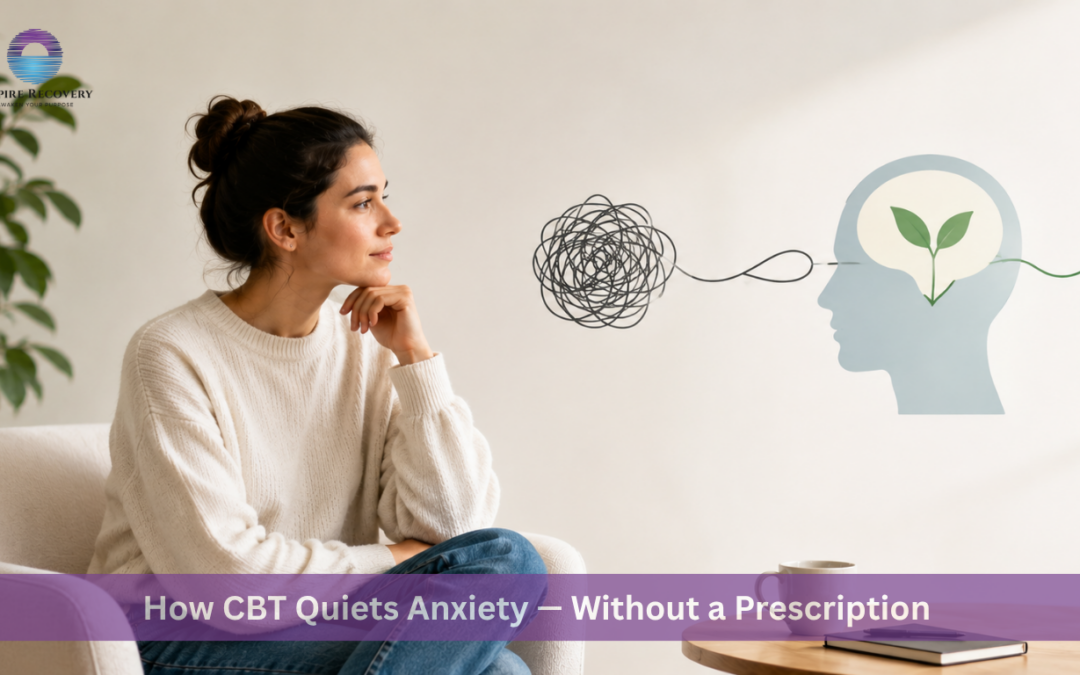
The basic CBT skill is thought challenging: when an anxious thought appears, you ask, “Is this thought a fact or an assumption? What’s the evidence for and against it?” This process, called cognitive restructuring, weakens the automatic link between a trigger and a fear response. If you’re ready to work with a professional, our cognitive behavioral therapy for anxiety team integrates CBT into personalized treatment plans.
7. Spend Time in Nature
Spending time outdoors, especially in green spaces, has a documented effect on anxiety. Japanese researchers studying Shinrin-yoku (forest bathing) found that 20 minutes in a natural environment significantly reduced cortisol levels and self-reported stress compared to urban environments.
You don’t need forests. A park, a garden, or even a tree-lined street works. The combination of natural light, reduced noise, and mild physical activity creates compounding benefits for the anxious nervous system.
8. Consider Magnesium and Lavender Supplementation
Magnesium is involved in over 300 biochemical reactions in the body, including the regulation of GABA receptors. Many people are deficient in magnesium without knowing it, and research suggests supplementation may reduce symptoms of anxiety and improve sleep quality.
Lavender essential oil (specifically the oral supplement Silexan, studied in European clinical trials) has also shown meaningful anxiety reduction compared to placebo. Before starting any supplement, it’s worth discussing with a healthcare provider, especially if you’re managing other conditions or medications.
9. Build Social Connection Intentionally
Loneliness is a significant amplifier of anxiety. Human beings are wired for social connection, and isolation activates the same threat-response systems that anxiety hijacks.
This doesn’t mean forcing social interaction when you’re overwhelmed. It means building low-pressure connection into your routine: a weekly call with a friend, a regular group activity, or a support community. For people in recovery or managing co-occurring mental health conditions, peer support groups offer both connection and perspective. Our mental health and recovery support programs provide community-focused programming that addresses anxiety alongside other challenges.
10. Establish a Consistent Daily Routine
Anxiety thrives on uncertainty. A predictable daily structure removes dozens of small decision points that would otherwise feed anxious thinking, and it creates a sense of control that calms the nervous system over time.
A morning routine with a fixed wake time, movement, and a few minutes of intentional breathing sets the tone for the day. An evening routine that signals the transition to rest helps the brain downshift. The routine itself matters less than its consistency.
Final Thoughts
Anxiety is real, and it’s exhausting. But it’s also one of the most treatable conditions in mental health, with or without medication. The 10 approaches here work because they address anxiety at its root: the nervous system, the thought patterns, the sleep, the biology, and the connection that every person needs to feel okay.
Start with one. Build from there. And if you need more support than habits alone can provide, professional anxiety treatment isn’t a last resort. It’s just the next step.
Start Your Journey to a Healthier, Happier You
Take the first step today – connect with a compassionate therapist who meets you where you are.
Frequently Asked Questions
A: Yes, for many people. Natural approaches like CBT, exercise, mindfulness, and sleep improvements produce clinically significant reductions in anxiety. For severe or persistent anxiety, professional support is recommended, and natural methods can complement medication rather than replace it.
A: Most people notice meaningful improvement within 2 to 4 weeks of consistent practice. Breathing techniques can work within minutes. Longer-term changes from exercise, sleep, and therapy typically take 4 to 8 weeks to fully build.
A: Diaphragmatic breathing and grounding techniques (like the 5-4-3-2-1 sensory method) produce the fastest relief because they directly activate the parasympathetic nervous system. They work in under 5 minutes for most people.
A: Most lifestyle-based approaches are safe. Supplements like magnesium and lavender should be discussed with a doctor, especially if you’re on medication. Anyone with severe anxiety, panic disorder, or co-occurring conditions benefits from professional guidance alongside self-help strategies.
A: If anxiety is interfering with daily functioning, relationships, work, or sleep for more than a few weeks, it’s time to talk to a professional. Natural strategies work best as part of a broader support plan. We offer individualized care for anxiety and co-occurring conditions, especially when it overlaps with substance use or other mental health challenges.