
Quick Answer: EMDR (Eye Movement Desensitization and Reprocessing) is a structured therapy that helps people in early recovery process unresolved trauma, reduce emotional triggers, and manage cravings. Developed by Dr. Francine Shapiro, it uses guided bilateral stimulation to change how traumatic memories are stored in the brain, making it one of the most effective trauma-focused treatments available for people navigating addiction recovery.
Most people enter early recovery thinking the hardest part is stopping the substance. It isn’t. The hardest part is facing what was underneath it all along.
Trauma, unprocessed grief, chronic shame, and distorted self-belief are among the most common drivers of substance use disorder. When those roots go untreated, sobriety becomes a daily battle against invisible forces. This is exactly where EMDR therapy changes the equation.
At Inspire Recovery, our licensed therapists integrate EMDR into individualized treatment plans because the evidence is clear: healing trauma is not optional in lasting recovery. It is the foundation.
What Is EMDR and Why Does It Work for Addiction?
EMDR is a type of trauma therapy developed by Dr. Francine Shapiro in the late 1980s. It is recognized by the World Health Organization (WHO) and the American Psychological Association (APA) as an effective treatment for PTSD and trauma-related conditions. In the context of addiction recovery, EMDR works by targeting the traumatic memories and distorted beliefs that drive compulsive substance use.
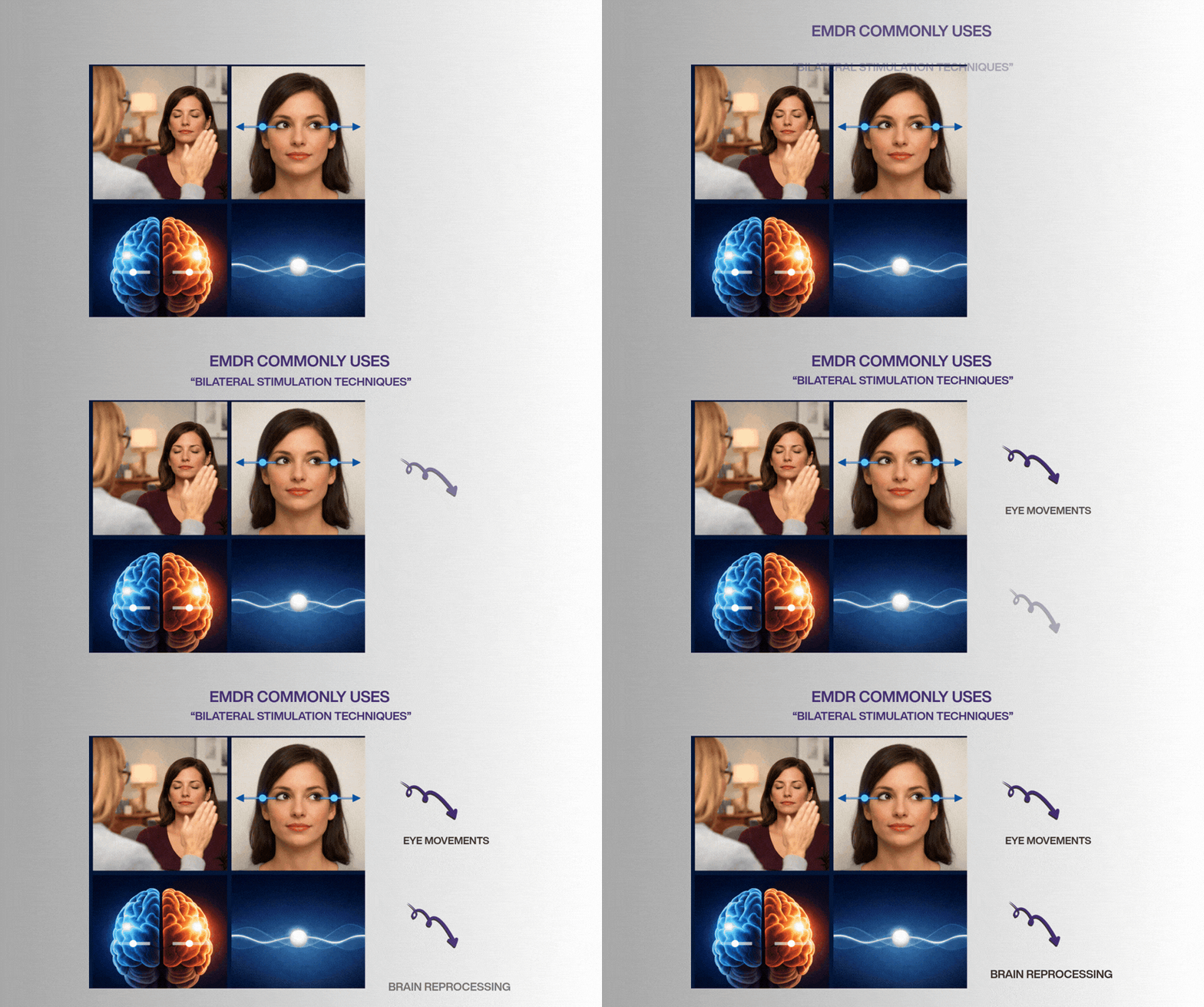
Here’s what makes it different from talk therapy: EMDR does not require you to verbally analyze every painful memory in detail. Instead, it uses bilateral stimulation, typically guided eye movements, tapping, or auditory tones, to help your brain reprocess traumatic experiences. Think of it as helping a stuck file finally save properly. The memory doesn’t disappear, but it loses its emotional charge. It stops running the show.
Research published in the Journal of EMDR Practice and Research has found that people with co-occurring PTSD and substance use disorder respond strongly to EMDR, often showing reductions in both trauma symptoms and cravings. That dual impact matters enormously in early recovery.
How EMDR Addresses the Trauma Underneath Addiction
Substance use disorder and trauma are deeply connected. Studies from the Substance Abuse and Mental Health Services Administration (SAMHSA) consistently show that a significant percentage of people seeking addiction treatment have experienced at least one major traumatic event. Many have experienced several.
What EMDR does is interrupt the cycle. When trauma goes unprocessed, the brain flags certain stimuli, a smell, a sound, a social situation, as threatening. The nervous system activates a stress response. For someone in early recovery, that stress response often becomes a craving. The substance was the coping mechanism. Without addressing the underlying trigger, the pull toward relapse stays strong.
Our trauma-informed treatment programs at Inspire Recovery are built around this understanding. EMDR is not an add-on. It is a core clinical tool for resolving the experiences that made substances feel necessary in the first place.
Reducing Cravings Through Desensitization
This is where EMDR in early recovery gets genuinely surprising results.
Cravings are not random. They are emotional and neurological responses tied to specific memories, associations, and beliefs. “I need this to cope.” “I don’t deserve to feel okay.” “This is the only thing that works.” These thoughts, often operating below conscious awareness, fuel the urgency behind cravings.
EMDR targets these memory networks directly. By desensitizing the emotional charge attached to craving triggers, the therapy reduces their intensity over time. Many clients describe this shift as the craving becoming more distant, less urgent, easier to observe without acting on.
This benefit is especially valuable in early recovery, when the nervous system is still recalibrating and emotional regulation is fragile. Our individualized recovery plans combine EMDR with peer support and aftercare strategies to reinforce this progress.
Building Emotional Regulation When It Matters Most
Early recovery is emotionally volatile. That’s not a weakness. It’s biology. The brain’s reward and stress systems are recalibrating after extended substance use, and for many people, this period brings waves of anxiety, depression, irritability, and grief they were never equipped to handle sober.
EMDR builds capacity. Through repeated sessions, clients develop what therapists call “dual awareness,” the ability to hold a difficult memory or feeling while remaining grounded in the present moment. This skill transfers directly to daily life, reducing the risk that an emotional spike will translate into a relapse.
When combined with cognitive behavioral therapy (CBT) and mindfulness-based approaches, EMDR creates a comprehensive emotional toolkit for people early in their recovery journey.
Rebuilding Self-Worth After Addiction
One of the quieter but profound benefits of EMDR is what it does to self-perception.
Addiction rarely travels alone. It brings shame, guilt, and a long list of negative self-beliefs: “I’m broken,” “I’m unlovable,” “I can’t be trusted.” EMDR works with these beliefs explicitly. Each session includes identifying the negative cognition connected to a memory and replacing it with a more accurate, adaptive belief through reprocessing.
Clients often report that after a course of EMDR, the inner narrative shifts. Not because they were told to think differently, but because the emotional evidence supporting the old belief has changed. That is a durable transformation, and it is one of the reasons our team at Inspire Recovery in Connecticut places such emphasis on identity-level healing alongside clinical treatment.
EMDR in Connecticut: Access, Community, and Skilled Support
Connecticut has a growing community of EMDR-trained therapists, and the state’s recovery network has increasingly recognized the value of trauma-focused care for sustained sobriety. This matters because access to skilled EMDR clinicians directly affects treatment outcomes.
At Inspire Recovery, our therapists are trained in EMDR therapy and experienced in working with dual diagnosis clients, those managing both substance use disorder and underlying mental health conditions like PTSD, anxiety, or depression. We believe that integrated, trauma-informed care is not a specialty offering. It is the standard of care that people in recovery deserve.
If you’re in early recovery in Connecticut and feel that unresolved trauma is pulling you back, you don’t have to work around it indefinitely. Reach out to our team to learn how EMDR can become part of your recovery plan.
Start Your Journey to a Healthier, Happier You
Take the first step today – connect with a compassionate therapist who meets you where you are.
Frequently Asked Questions
A: EMDR (Eye Movement Desensitization and Reprocessing) is a structured psychotherapy developed by Dr. Francine Shapiro that uses bilateral stimulation to help the brain reprocess traumatic memories. In addiction recovery, it is used to address the underlying trauma and emotional triggers that drive substance use, reducing cravings and supporting long-term sobriety.
A: Yes, when administered by a trained therapist, EMDR is considered safe during early recovery. Clinicians typically stabilize the client first, building coping resources before processing traumatic material, which makes it appropriate and effective even in the early stages of sobriety.
A: The number of sessions varies by individual and the complexity of their trauma history. Some people notice significant shifts in 6 to 12 sessions, while others with more complex trauma histories benefit from longer-term treatment. Your therapist at Inspire Recovery will work with you to set realistic expectations based on your specific needs.
A: Unlike traditional talk therapy or cognitive behavioral therapy (CBT), EMDR does not require in-depth verbal processing of traumatic events. It works through bilateral stimulation to change how memories are neurologically stored, which is particularly useful for clients who find it difficult to discuss their trauma directly. Many treatment programs now use EMDR and CBT together for stronger outcomes.
A: Yes. Inspire Recovery integrates EMDR therapy into individualized treatment plans for clients in early recovery. Our licensed therapists are trained in EMDR and experienced in working with substance use disorder, trauma, and dual diagnosis conditions. You can learn more or schedule a consultation by visiting our contact page.